
How to Stretch Your Grocery Budget and Feed Your Family Well

There’s something comforting about the way our grandmothers cooked — simple, frugal, and full of love. Do you ever find yourself craving the kind of meals that filled their kitchens with the smell of something simmering on the stove and bread baking in the oven?
My husband and I have a large family and feeding all of these people over the last few decades has always been an adventure. I am no stranger to feeding a lot of kids on a budget and learning how to stretch the food you have is a skill that will benefit you and your family for years to come.

As homemakers, we’re constantly balancing needs versus numbers. It’s part of the ministry of homemaking—nourishing the people under our roof with warmth, resourcefulness, and gratitude. This post isn’t about cutting corners or living in scarcity. You really can feed your family nourishing food on a tight budget. All you need is a little creativity and some basic kitchen and cooking knowledge.
One of the best things you can do for yourself and your family is learn how to cook from scratch. You’ll save so much money and be able to whip up delicious meals that feel comforting every day.
The Heart of Stewardship in the Kitchen
Stretching the grocery budget starts with a mindset shift. It’s less about deprivation and more about creativity and care. Every dollar, every meal, every loaf of bread becomes part of the quiet work we do to serve our families at home.
“She is like the merchant ships; she brings her food from afar.” — Proverbs 31:14
The homemaker in Proverbs 31 planned ahead and managed her household with intention. And we can do the same—whether that means keeping an eye out for the best sale, baking bread instead of buying it, or using what’s already on hand before we buy more.
Homemaker Tips for Stretching the Grocery Budget
Below are some tried-and-true ways to make your grocery budget go further—without sacrificing the comfort or nourishment your family deserves.
1. Plan Before You Shop
Before you even step into the store, take stock of what you already have. Check your pantry, freezer, and fridge. Make your meal plan around those ingredients first.
I keep a simple inventory sheet that helps me remember what’s tucked away in the back of the freezer or what needs using up soon. A little organization on the front end can make a big difference when it comes to saving money week after week.
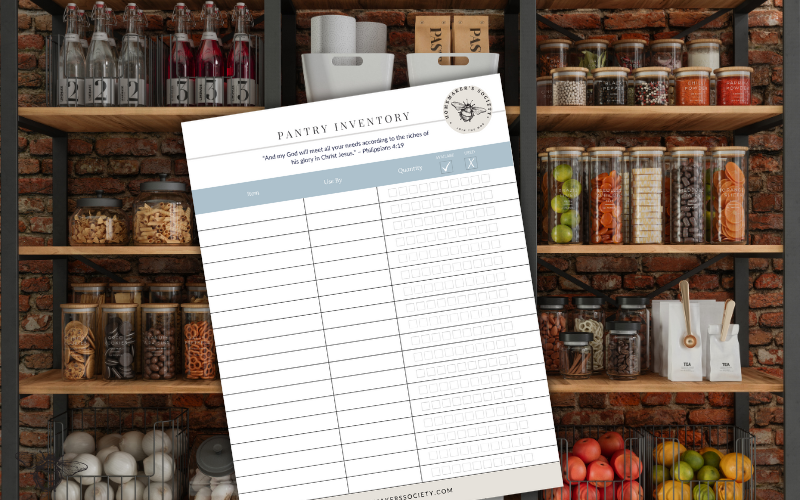
💡 Homemaker Tip: Try a “use-it-up” week once a month—plan meals entirely from what you already have on hand. You’ll be surprised how creative you can get.
2. Cook from Scratch (Without the Pressure)
Cooking from scratch doesn’t have to mean everything is homemade all the time. It’s about balance and intention. Making simple staples like homemade bread, soups, or salad dressings can save money and add flavor to your meals. Some weeks I have the time to bake bread from scratch, and others I don’t—and that’s okay.
🍞 Homemaking isn’t about perfection—it’s doing what you can with what you have.
I want to remind you that the meals you cook for your family don’t need to be Pinterest worthy, gourmet meals. In fact, I want to encourage you that the best recipes are the ones that use simple ingredients. I think that this generation has been so spoiled with so many choices and exotic foods that we’ve forgotten what home cooked meals really look like.
Think back to your childhood. What foods did you love the most?
My guess is that your mom or grandmother made simple dishes—maybe a pot of soup, a pan of cornbread, or something bubbling in the oven that filled the house with warmth—and you felt love in every bite. That’s the kind of cooking that lingers in our hearts. Not the picture-perfect meals or the fancy ingredients, but the kind that gather people around the table and make them feel safe, seen, and nourished.
So if all you have tonight is beans and rice, or a pot of vegetable soup and a slice of buttered bread, that’s okay. In fact, I believe it’s better than okay! There’s beauty in simplicity.


3. Stock Ingredients that Work Hard for You
One of the best ways to make your grocery budget stretch is to simply shop for ingredients. When you stock your kitchen with versatile ingredients—grains, vegetables, dairy, spices, and baking staples—you give yourself freedom and flexibility.
A well-rounded pantry means you can create almost any recipe without running to the store every few days. Keep a mix of shelf-stable items and fresh produce that work well together. Things like onions, potatoes, carrots, spinach, rice, pasta, beans, eggs, flour, and sugar can form the base of countless meals.
Each ingredient in my kitchen is just waiting to be turned into something delicious. Even if your pantry isn’t filled to the brim, if you know how to be creative in the kitchen – if you know what ingredients work well together – you can come up with so many different meals from just a few ingredients.
If you were to give me a list of a few random things in your pantry, I could quickly give you meal ideas because I know how to cook and what foods work together and how. I want to encourage you to learn these skills.
4. Stretch Meals Creatively
Learn how to think like the women who came before us, our grandmothers who could make a pot of soup or a casserole stretch for two nights and when we sat down to eat it still felt like a feast.
Add beans, lentils, or rice to meat dishes to bulk them up. Use leftover chicken for soup or tacos. Turn extra vegetables into a frittata or stir-fry. And if you’re already cooking, consider doubling the recipe and freezing the second batch for busy weeks. Your future self will thank you.
I’ll share more ideas about how to stretch your meals in another blog post soon.
5. Waste Less, Save More
Did you know most families throw away hundreds of dollars’ worth of food each year? A few small changes can make a big difference.
- Store produce properly (a simple towel in the crisper drawer helps with moisture).
- Label leftovers with the date and keep them in clear containers so you actually see them.
- Freeze fruit that’s getting soft for smoothies or baked goods.
- Pack leftovers for your husband to eat for lunch.
- Utilize food scraps like vegetable peels and apple cores to make other recipes like vegetable broth or apple cider.
If you’re ready to get serious about minimizing waste, invest in a few quality storage items—glass containers, mason jars with labels, or even a vacuum sealer if you shop in bulk. They pay for themselves over time.
related: Waste Not, Want Not
6. Shop Smarter, Not Just Cheaper
Knowing your prices is half the battle. Pay attention to unit prices and learn which stores consistently have the best deals for your staples.
Use store apps for digital coupons or weekly ads, but don’t get swept up chasing every sale. A homemaker’s time is valuable, too.
Sometimes, the best strategy is finding one or two stores that meet your needs and sticking to a plan that keeps you calm instead of scattered.
To be the most economical, make your meal plan after you go to the grocery store and buy what’s on sale.
7. Grow What You Can
Even a few pots on a windowsill can make a difference. Fresh herbs like basil, mint, or parsley are easy to grow and instantly elevate a meal.
If you have the space, start small with tomatoes, peppers, or lettuce. Gardening connects you to your food and reminds you how generous God’s provision really is.
“And my God will supply every need of yours according to his riches in glory in Christ Jesus.” — Philippians 4:19
related: Free Printable Garden Planner (44 Pages to Print)
Feeding Your Family Well
Feeding your family well on a budget isn’t about the fanciest recipes—it’s about meals made with love and thoughtfulness. A pot of soup shared around the table, fresh bread still warm from the oven, or a simple bowl of beans and rice can all be moments of grace when they’re seasoned with gratitude.
Old-Fashioned Meals Our Grandmothers Would Have Made:
- Vegetable Soup and Grilled Cheese Sandwiches — A hearty, comforting way to use up produce and pantry staples.
- Chicken and Dumplings — Stretch one chicken into a full, nourishing meal that feels like a hug in a bowl.
- Beans and Fried Potatoes — Navy, pinto, or white beans simmered all day, served with crispy skillet potatoes on the side. Add some sliced tomatoes, cucumbers, raw onion, and/or banana peppers if you have them.
- Bean Soup and Cornbread — Simple ingredients that fed big families through lean times, still a timeless comfort meal today. My favorite meal in the whole world is white lima bean soup and homemade cornbread.
- Homemade Biscuits and Gravy — A Southern breakfast favorite that fills bellies with just a few pantry staples.
- Shepherd’s Pie or Hamburger Casserole — Ground meat, vegetables, and mashed potatoes baked into hearty, budget-friendly comfort food. If you don’t have meat, you can substitute lentils.
- Tuna or Salmon Patties — Canned fish mixed with cracker crumbs or oats and pan-fried golden brown.
- Eggs for Supper — Scrambled eggs, grits, and toast (or pancakes) — simple, nourishing, and always welcome.
- Cabbage and Sausage Skillet — Just a few ingredients, but full of flavor and comfort. I like adding pan fried apples to mine!
- Macaroni and Tomatoes — A humble Depression-era classic made with pasta, canned tomatoes, and a touch of butter. This one is still very popular today in Appalachia where I live.
- Homemade Chicken Noodle Soup — Made from a whole chicken to stretch every bit of meat and broth. Add some veggies like carrots, celery, onion, and peas if you have them.
- Potato Soup with Bread and Butter — Creamy, filling, and made with ingredients nearly every homemaker already has on hand. You don’t need as much milk for this if you use some vegetable or chicken broth. Make your own chicken broth with leftover bones and vegetable broth with leftover vegetable peels.
- Meatloaf and Mashed Potatoes — The Sunday dinner staple that never goes out of style. Add oatmeal to the meatloaf mixture to stretch it. Or make my vegetarian version here.
If you’re in a season where money feels tight, take heart—you’re not failing. You’re learning the art of resourcefulness, one meal at a time.
When you choose gratitude over grumbling and contentment over comparison, you’ll find that your home—and your heart—already have more than enough.
So tonight, when you stand in your kitchen stirring a pot of soup or packing lunches for the next day, remember: you’re doing holy work. Homemaking is ministry. Stewardship is worship. And God delights in your faithfulness.
More Ideas You’ll Love
If you enjoyed this post, you’ll love these: