
How to Create a Spending Plan That Actually Works for Your Family

There’s a moment most homemakers know. You look at your bank account mid-month and the number is lower than it should be. You didn’t do anything extravagant. You didn’t go on a trip or buy something expensive. The money just… went. And you can’t quite account for where.
That feeling is what a spending plan is designed to fix. I want to make a distinction right at the start because I think it matters.
A budget looks backward. It tracks what you already spent and tells you where the money went. A spending plan looks forward. It decides where the money goes before you spend it — on purpose, in advance, according to your values and your family’s actual life.
That distinction is the whole point of this post. Because most homemakers who have tried and failed at “budgeting” weren’t actually failing at budgeting. They were trying to use a tracking tool as a planning tool, and it doesn’t work. You can track your spending perfectly and still run out of money every month. Knowing where the money went doesn’t stop you from spending it wrong next time.
A spending plan does.
Why Most Budgets Fail
Most budget systems fail for one of three reasons.
They’re too complicated. Thirty-seven categories and a spreadsheet that takes two hours to update is not a system — it’s a project. Nobody maintains a project for long.
They’re too rigid. Real family life doesn’t fit neatly into predetermined categories. The month your car needs new tires is not the month you planned for. A system that breaks the moment something unexpected happens isn’t a system worth having.
They’re built for someone else’s life. A budget designed for a dual-income couple with no children looks nothing like what a homeschooling mother of four needs. Most budgeting content is written for a generic household that doesn’t exist.
What I want to give you is something simpler, more flexible, and actually designed for a homemaker’s life.
The Four Categories That Actually Matter
Forget the thirty-seven line items. A working spending plan for a homemaker’s household needs four categories and nothing else.
#1 Fixed Expenses These are the bills that are the same every month and non-negotiable — mortgage or rent, insurance premiums, car payments, loan payments, utilities (use an average). Write them down. Add them up. This number doesn’t change much month to month and it’s the foundation of your plan.
#2 Variable Necessities These change month to month but are still non-negotiable — groceries, gas, medical expenses, household supplies, clothing for growing children. These need a realistic estimate, not a wishful one. Look at what you actually spent in the last two or three months and use that as your baseline, not what you wish you spent.
#3 Savings + Giving This goes in before discretionary spending — not after. Most families intend to save what’s left over at the end of the month. There is never anything left over at the end of the month. Savings must be assigned before you spend, not from whatever remains.
Even $25 a month is a savings plan — and if you want a tool that makes starting even easier, Acorns automatically rounds up your everyday purchases and sets the spare change aside to invest without you having to think about it. Join me on Acorns and get a free $5 investment to start →
*As a perk of referring you, I may receive a reward too. See terms here.
#4 Everything Else What remains after fixed expenses, variable necessities, and savings is what you have for everything else — eating out, entertainment, hobbies, gifts, subscriptions, and the small daily purchases that quietly drain a budget. Assign this a number. When it’s gone, it’s gone.
That’s the whole system. Four categories. One decision made in advance every month before the money moves.
How to Build Your Plan — Step by Step
Step 1: Start with your real monthly income. If your husband is paid weekly or bi-weekly, calculate the monthly equivalent. Use take-home pay — not gross income. The money that actually hits your account is what you have to work with.
Step 2: List and total your fixed expenses. Mortgage or rent, insurance of every kind, car payments, loan payments, subscriptions you can’t cancel right now. Add them all up. This is your floor — the minimum your household costs each month before anyone eats or drives anywhere.
Step 3: Estimate your variable necessities realistically. Pull up your bank or credit card statements from the last two or three months and look at what you actually spent on groceries, gas, medical, and household supplies. Average it. Don’t guess low — that’s how spending plans fail in week two. Be honest about what your family actually uses.
Step 4: Assign savings and giving before you go further. Even if it’s small. Decide a number and write it down as an expense — because it is one. Giving to your church or to people in need belongs here too. These come off the top, before everything else.
Step 5: See what’s left. Subtract fixed expenses, variable necessities, and savings from your income. What remains is your discretionary number. This is what you have for everything else this month — eating out, clothing beyond basics, entertainment, personal spending, gifts, and all the small purchases that add up.
If that number is negative, you have a spending problem to solve before you can build a spending plan. That’s a different conversation — but it starts here, with knowing the real number.
Step 6: Write it down and put it somewhere visible. A spending plan that lives only in your head is not a spending plan. It’s an intention. Write it on a piece of paper. Put it on the refrigerator, inside a cabinet door, in your household notebook. Somewhere you will actually see it when you’re making decisions about money during the month.
The Envelope Method — For Women Who Want to Go Further
If you want a more tactile system — one that makes the limits feel real rather than theoretical — the envelope method is worth trying.
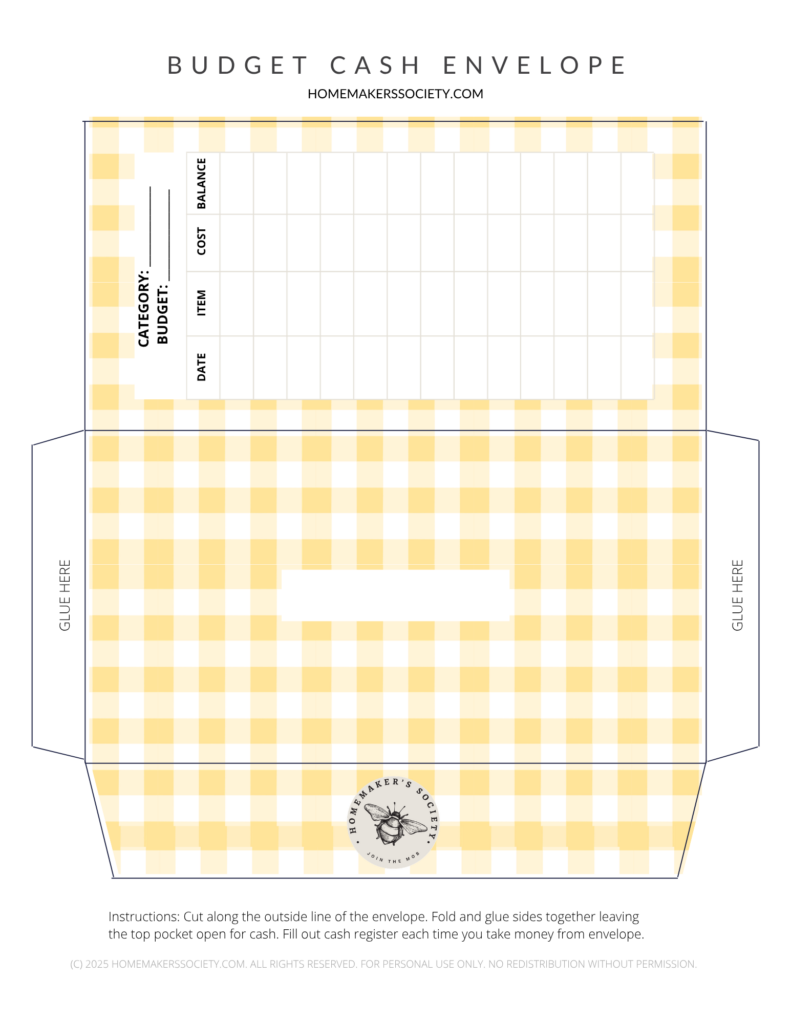
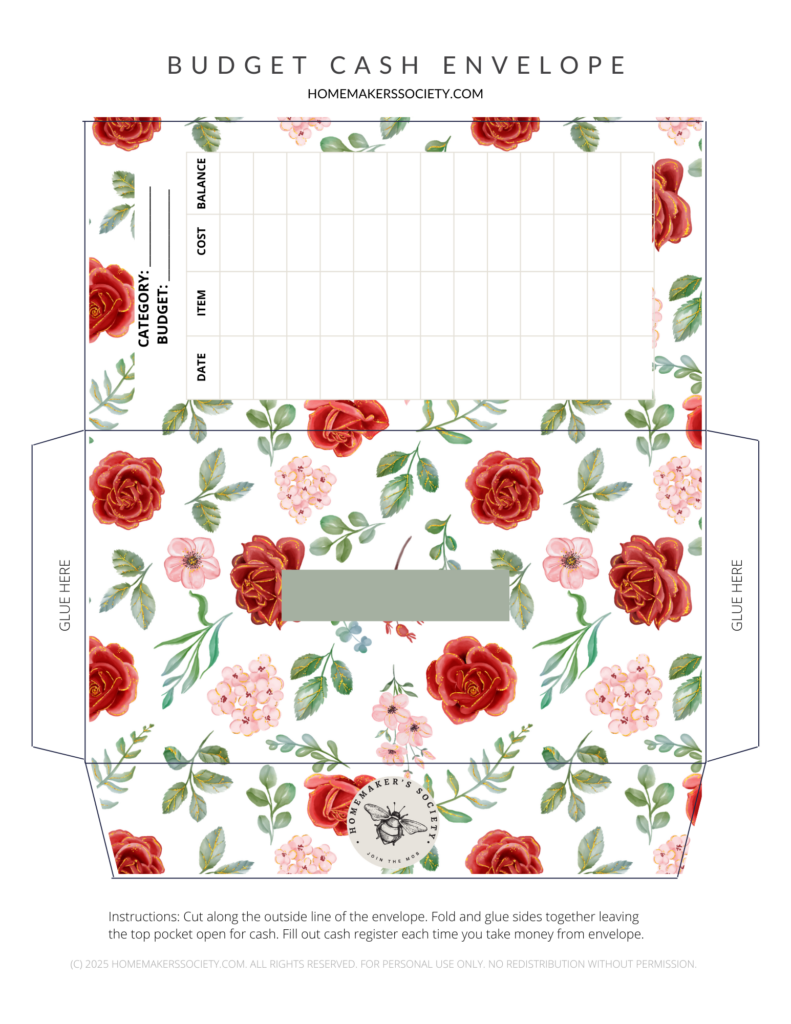
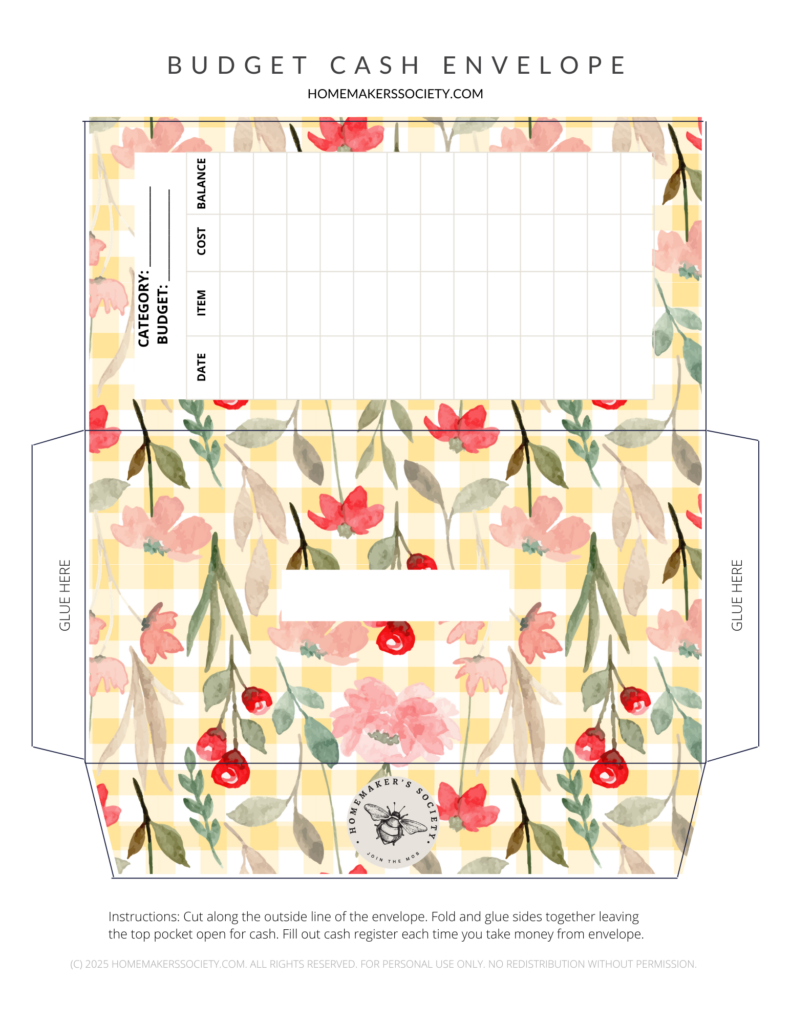
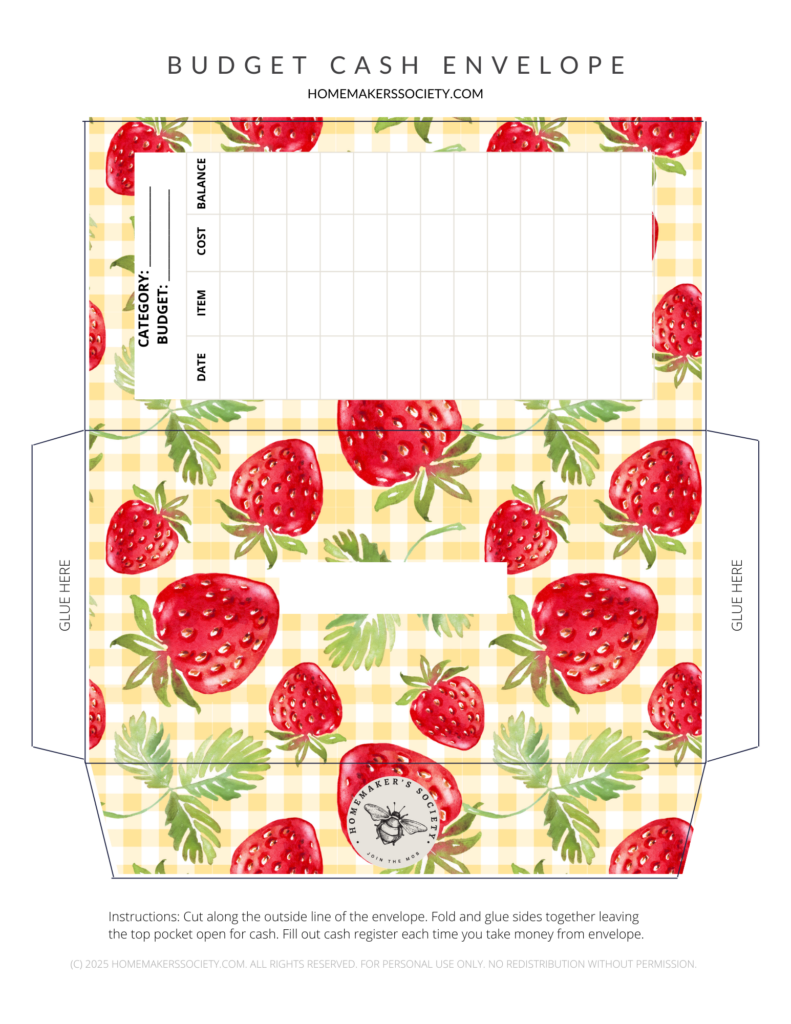
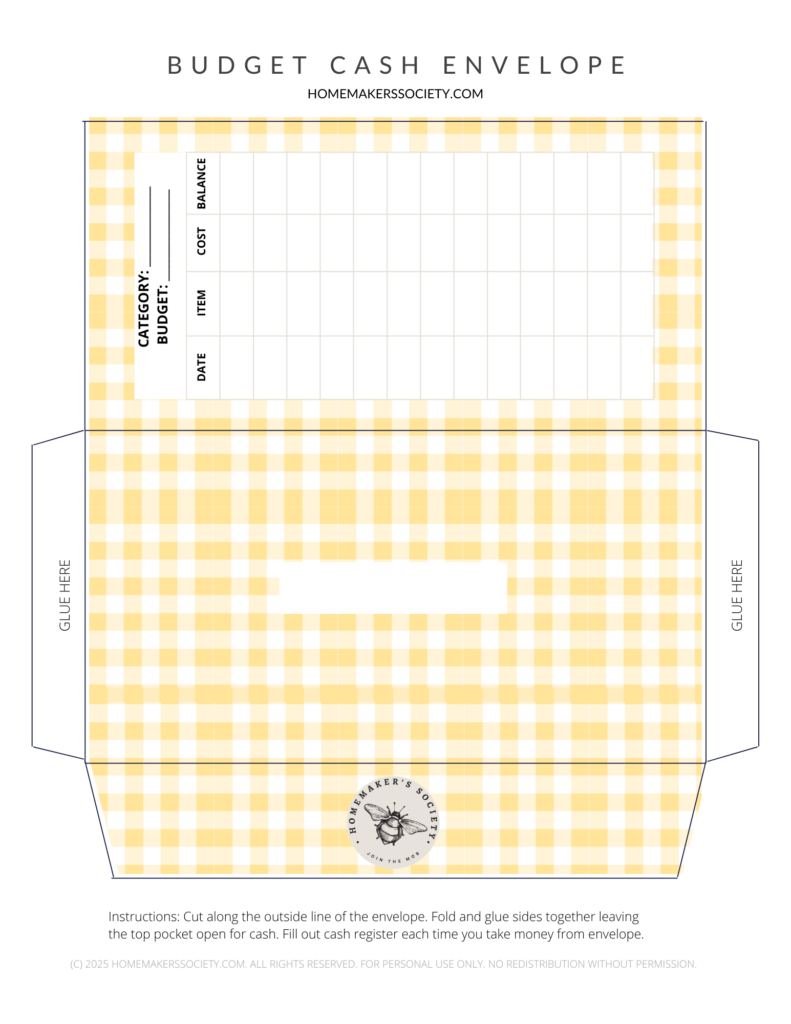
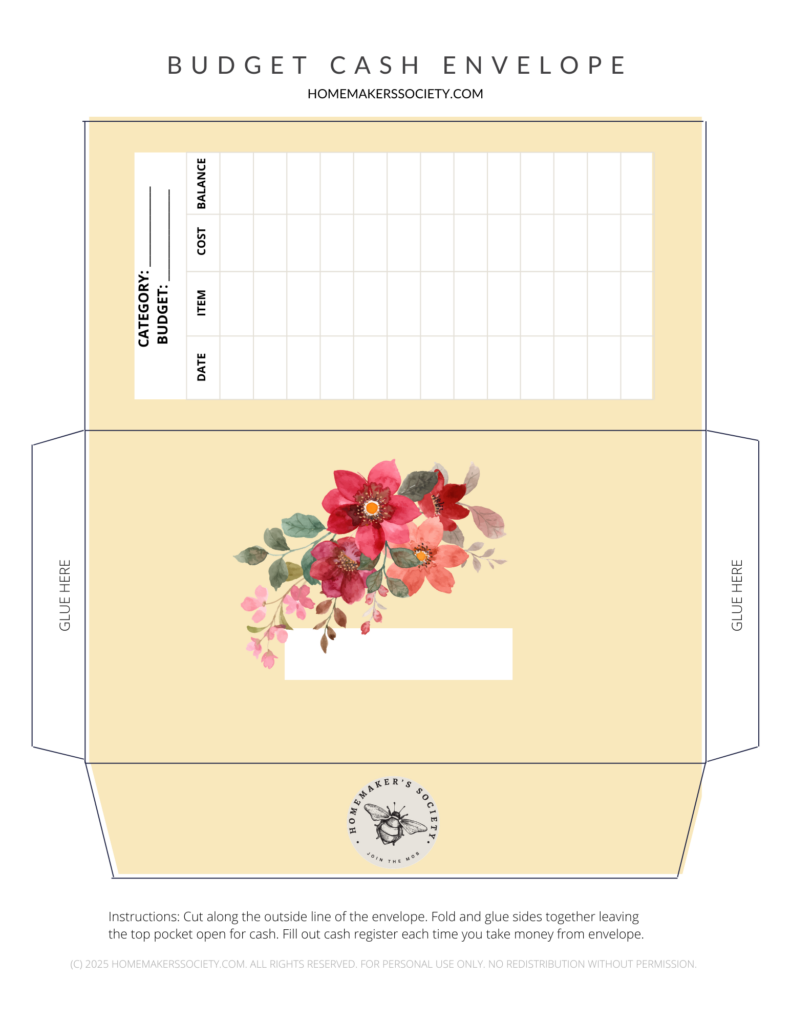
Here’s how it works: after your fixed bills are paid from your account, you withdraw cash for your variable categories — groceries, gas, household supplies, and discretionary spending — and divide it into physical envelopes labeled by category. When the envelope is empty, that category is done for the month. No transferring from another envelope. No putting it on the card and figuring it out later. When it’s gone, it’s gone.
It sounds old-fashioned. It works because it’s physical. There is something about handing over actual cash that changes how spending feels in a way that swiping a card never does. If you’ve never been able to make a budget stick any other way, try cash for one month and see what changes.
If you’re a member of The Homemaker’s Society, you’ll find printable cash envelopes for free in the Member Homemaking Library – in the Home Economy + Budgeting section.
What to Do When the Plan Doesn’t Go as Planned
It won’t go as planned. Not the first month. Probably not the second month either. Something unexpected will happen — a car repair, a medical bill, a birthday you forgot to account for — and the plan will need to bend.
Just remember when that happen, you have not failed. You’re learning. That’s a spending plan doing exactly what it’s supposed to do: showing you the reality of your finances so you can make a real decision, not just a hopeful one.
When the plan breaks down, do one thing: figure out which category the unexpected expense comes from and adjust something else to compensate. Don’t abandon the plan — adjust it. The goal isn’t a perfect month. The goal is a household that knows where its money is going and makes conscious decisions about it.
My mama used to say that a plan bent is better than no plan at all. That’s true of a spending plan, too.
I created the Wise Homemaker Financial Protection Workbook specifically for homemakers who want their family’s complete financial picture in one place — spending plan pages, bill tracker, subscription tracker, savings goals, insurance records, important documents, and an emergency action plan. It’s a lot more than a budget workbook. Members can find it in the Fireside Room, and it’s also available in the shop if you want to share it with a friend.
Members only: find it in the Fireside Room under Home Economy + Budgeting →
Or, you can get it in the shop for just $9.00 →
One More Thing
A spending plan only works if both spouses are in it together. If you’re building a plan while your husband is spending without one, the plan won’t hold. This has to be a conversation — ideally a monthly one, even if it’s short. Sit down together at the beginning of the month, look at the plan, talk about anything unusual coming up that month, and agree on the numbers.
That monthly conversation is worth more than any spreadsheet or app. It makes money a shared responsibility instead of a source of conflict. And it keeps the spending plan from being something you’re trying to enforce alone.