How to Start a Chore System That Actually Works

I’ve had more than a few conversations with moms who’ve tried a chore system, watched it fall apart by week two, and quietly decided their kids just weren’t the chore-doing type. I want to gently push back on that.
The chore system didn’t fail because your kids are difficult. It failed because most chore systems are set up to fail from the start. Too many tasks, too complicated, too much riding on everyone remembering what they’re supposed to do and when.
Here’s what I’ve learned after years of running a home with children underfoot: a chore system that works isn’t the most elaborate one. It’s the simplest one you’ll actually follow through on.
Let me show you how to build it.
Step One: Know What Your Kids Can Actually Do
This is where most moms start wrong. They assign chores based on what they need done, not what their child is developmentally ready for. Then they get frustrated when a four-year-old can’t sweep the floor properly, or a six-year-old bursts into tears over folding laundry.
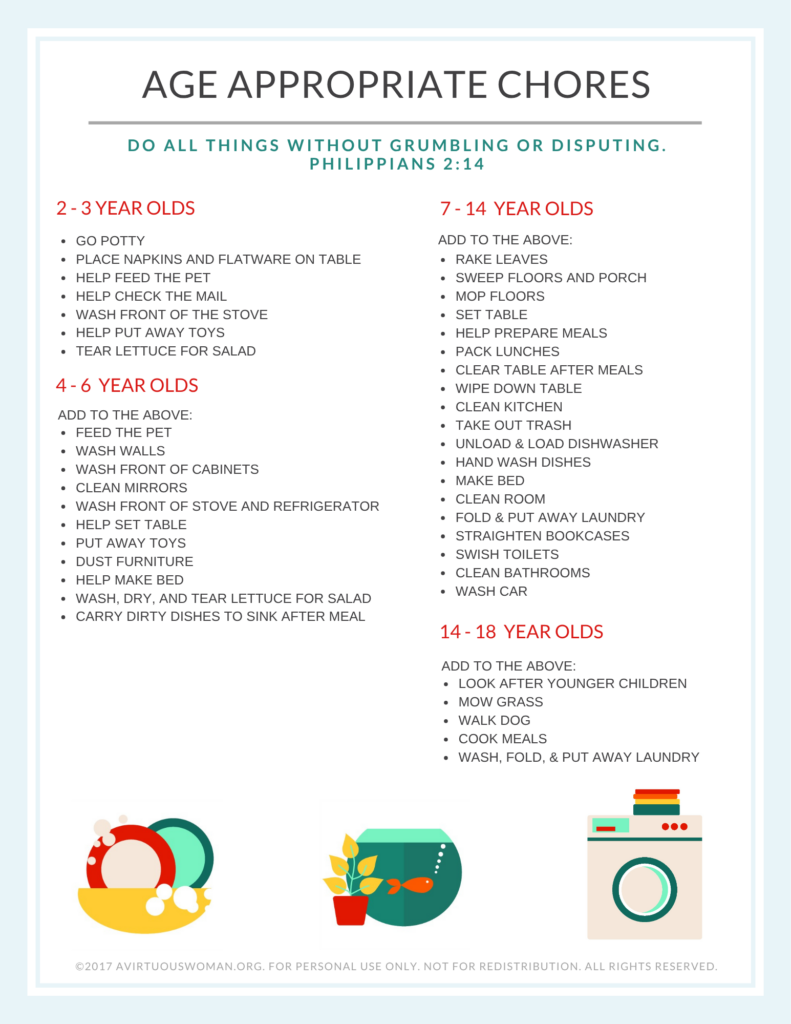
Before you assign a single task, look at what’s age-appropriate.
Children as young as two and three can put toys away, throw trash in the trash can, and put dirty clothes in the hamper. By five or six, they can set the table, make their bed (imperfectly — and that’s fine), and help unload the dishwasher. By eight or nine, they can take on real responsibility: vacuuming, doing laundry start to finish, cleaning a bathroom.
Related: Download the Age-Appropriate Chores printable — it lists tasks by age group so you’re not guessing. It’s available inside the Homemaker’s Society instantly, or you can purchase it here.
The goal at every age is to stretch them slightly without setting them up to fail. A task that’s a little hard builds competence and confidence. A task that’s impossible builds resentment.
Step Two: Start With One Chart, Not a System
The word “system” can make this feel bigger than it needs to be. Before you build a system, build a habit. And a habit starts with one chart.
Pick three to five tasks for each child. Not ten. Not everything you wish they would do. Three to five things that, if they happened consistently, would genuinely make your home run better.
For a young child this might be: make your bed, put your dishes in the sink, pick up your toys before dinner.
For an older child: take out the trash, vacuum the living room, wipe down the bathroom sink.
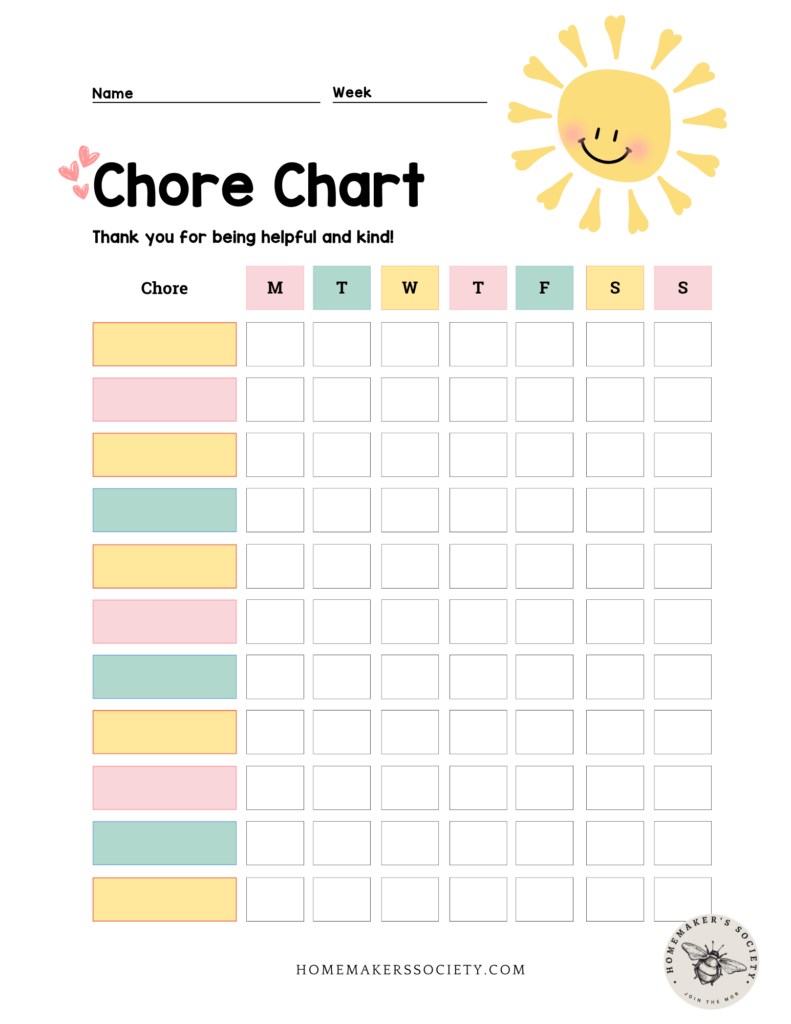
Write those tasks on a chore chart. Post it somewhere they’ll see it — on the fridge, in their bedroom, on the back of the bathroom door. The chart removes the “I forgot” excuse because it’s right there every day.
Related: The Sunshine Chore Chart is a great starting point — cheerful, clear, and simple enough that young children can follow it independently. It’s available inside the Homemaker’s Society members’ only: Family Life Library.
Use the chart for two full weeks before you add anything else. Let it become normal before you layer on more.
Step Three: Have a Plan for When It Doesn’t Happen
This is the piece most chore systems are missing — and it’s why they fall apart.
What happens when the chore doesn’t get done? If the answer is “nothing,” the chore will not get done consistently. Children (and honestly, adults) respond to natural consequences. Not punishment — consequences.
The Uh-OH Bucket is one of the most effective tools I’ve found for this. When something is left out, it goes in the bucket. To get it back, a chore must be done. Simple, calm, consistent. No yelling, no reminding fourteen times. The item goes in the bucket. Your child learns that things left out have a cost.
Related: Download the Uh-OH Bucket printable — includes the label and instructions for setting it up. You can download this printable here. It’s also found in the Family Life Library for members only.

Pair this with whatever chore chart you’re using, and you have a complete starter system: clear expectations, a visual reminder, and a calm consequence when things go sideways.
A Note on Teaching, Not Just Assigning
One thing I see moms skip is the teaching step. We assign the chore and then feel frustrated when it isn’t done the way we would do it.
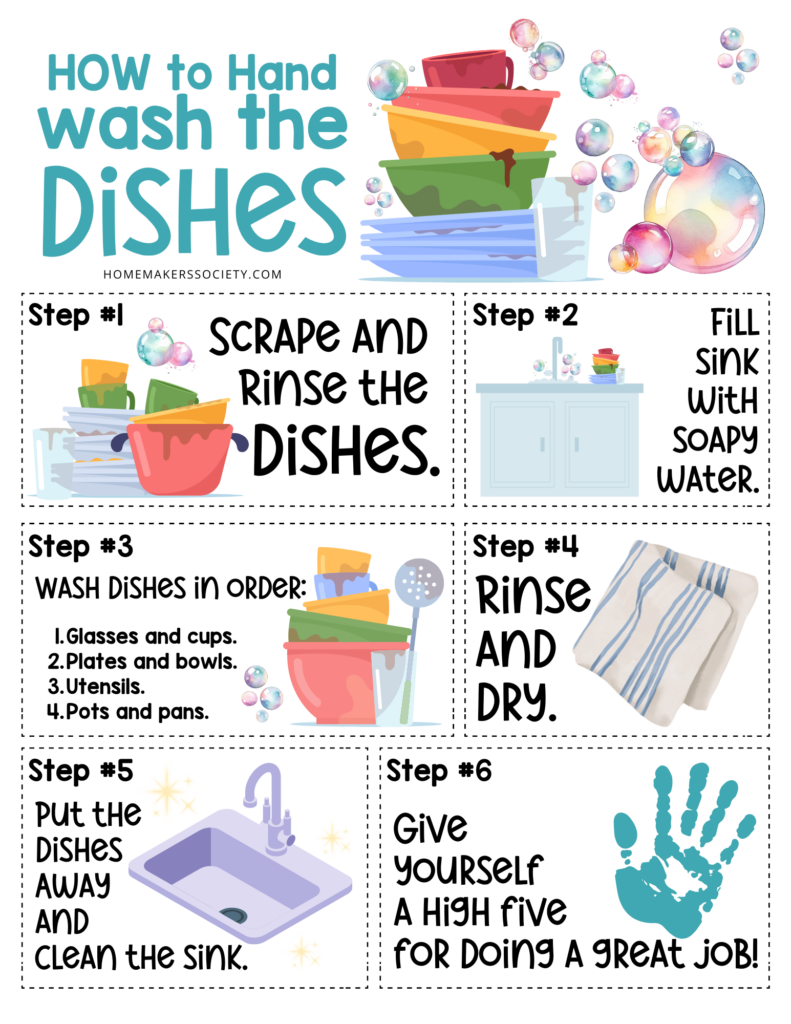
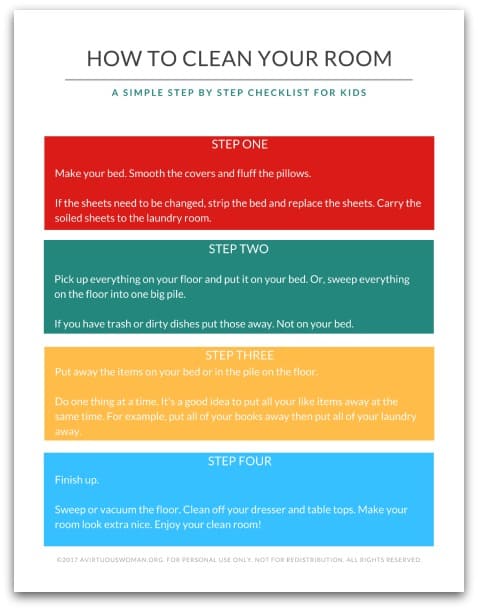
But children don’t know how to wash dishes properly until someone shows them. They don’t know how to clean a bedroom until someone walks them through it step by step.
Before a chore goes on the chart, show your child how to do it — slowly, without rushing, more than once. Do it together first. Then watch them do it. Then let them do it alone. That three-step teaching process takes more time upfront but saves enormous frustration on the back end.
Related: How to Wash the Dishes Chart and How to Clean Your Bedroom Step-by-Step — both walk kids through the task visually so you don’t have to explain it every single time. These printables are also available in the Family Life Library for members only.
You Don’t Have to Build It All at Once
A chore system that works in your home six months from now will probably look different from what you start with today. That’s not failure — that’s refinement.
Start small. One chart. Three to five tasks per child. Two weeks of consistency. Then adjust.
The goal isn’t a perfect system. The goal is a home where your children know what their contribution is, and where that contribution actually happens most days.
Get the Printables
If you’re a member of The Homemaker’s Society, everything you need to start is inside The Hearthside Room under Family Routines + Chores. You’ll find the Age-Appropriate Chores guide, the Sunshine Chore Chart, the Uh-OH Bucket, and more than a dozen other tools for building family routines that hold.
Access Family Routines + Chores in The Hearthside Room →
If you’re not a member yet, this is exactly the kind of resource that lives inside the membership — practical, printable, and ready to use. Come join us.
Join The Homemaker’s Society →