How to Declutter One Area at a Time (And Actually Finish)

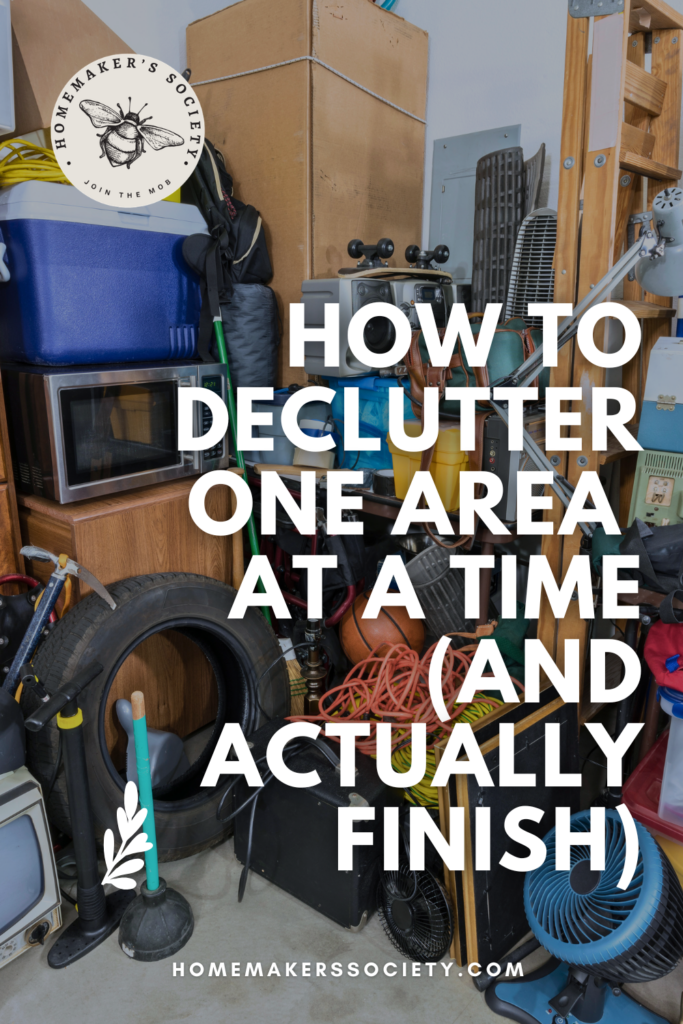
There’s a particular kind of tired that comes from living in a home that feels like too much. Not dirty, necessarily. Just — full.
Full of things that don’t have a home, decisions that never got made, and a low-grade sense that you should probably deal with it all sometime. You walk past the same pile every day. You open the same overstuffed drawer and close it again. You think, I really need to tackle this — and then life keeps moving and nothing changes.
If that’s where you are, I want you to hear something important: you don’t need a decluttering weekend. You don’t need three days and a dumpster and a brand new organizational system. You need one area and a simple method for finishing what you start.
That’s what this post is about.
Related: How to Set Up a Seasonal Cleaning Rotation
Why “One Area at a Time” Actually Works
Most decluttering attempts fail for one reason: they start too big.
You decide to do the whole house, or the whole bedroom, or at least the whole closet — and an hour in, you’re standing in the middle of a bigger mess than you started with, feeling worse than when you began. So you quit. The stuff goes back. Nothing changes.
Here’s what works instead: pick one area small enough to actually finish, and don’t move on until it’s done.
One drawer. One shelf. One corner. One category of items.
That’s it. That’s the whole strategy — and it works because finishing something, even something small, changes how you feel about your home. It gives you proof that you can do this. And proof is more powerful than motivation.
Before You Begin: The Two Things You Need
1. A reset zone. This is the one area you’re going to work on. Choose it before you start, and write it down. It should be the spot that bothers you the most when you walk by it — the one that makes you sigh a little every time you see it. That’s usually where the most relief is waiting.
Your reset zone might be:
- A specific kitchen cabinet or the pantry
- The paper pile (or the chair, or the counter — wherever paper goes to die in your house)
- A bedroom closet or dresser
- The dining room catch-all zone
- One bathroom cabinet
- The kids’ toy area
- A spare room corner
Small is fine. One drawer is a legitimate reset zone. Start where you are.
2. A keep basket. Before you do anything else, set a laundry basket or large bin somewhere in your reset zone. Anything you find that belongs elsewhere in your house goes in the basket — not away, just in the basket. You’ll do a quick put-away run later. This one habit keeps you from spending your whole decluttering session wandering around your house putting things away and losing your focus.
The Method: Work in Passes, Not Perfection
The biggest mistake people make when decluttering is trying to make every decision perfectly on the first pass. That’s exhausting, and it’s why you end up sitting on the floor holding a candle you got at a white elephant gift exchange in 2019 trying to decide if you really like it.
Work in passes instead. Each pass has a specific job, and that job gets easier as you go.
Pass 1 — Clear the obvious (5–10 minutes)
Walk through your reset zone and pull out anything that is clearly trash, clearly broken, or clearly doesn’t belong here. Don’t overthink it — just grab the obvious stuff. Trash goes in the trash. Broken things go in the trash. Things that belong elsewhere go in the keep basket.
Don’t make any hard decisions yet. Just clear the noise.
Pass 2 — Sort into three piles (15–20 minutes)
Now go through what’s left and make three piles:
- Keep here — it belongs in this area and you use it
- Put away elsewhere — it belongs in the house, just not here
- Let go — donate, sell, or trash
This is where most of the work happens, and here’s the honest truth about it: most decisions aren’t actually hard. The hard-feeling decisions are usually just unfamiliar. The more you practice asking “does this belong here, and do I use it?” the faster the answers come.
A few questions that help when you’re stuck on something:
- If I needed this, would I know where to find it?
- If I were moving, would I pack this?
- Does someone else need this more than I do?
- Am I keeping this out of guilt or out of genuine usefulness?
You don’t have to be ruthless. You just have to be honest.
Pass 3 — Put things in their place (10–15 minutes)
Put your “keep here” items back — but put them back intentionally. If this area gets cluttered again fast, it’s usually because things don’t have a clear home. This is the time to make a home for things, not just stack them back up.
Take your keep basket and do a quick put-away run through the house. This doesn’t have to be perfect — just get things roughly where they belong.
Then deal with your “let go” pile before you close out. Bag it up for donation or trash it immediately. Don’t let it sit. Items waiting to leave the house have a way of quietly making their way back into the house.
Pass 4 — The quick reset (5 minutes)
Wipe down the area. Straighten what you kept. Step back and look at it.
That feeling right there — that small, quiet satisfaction — that’s what you’re building toward with your whole home.
Going Room by Room: Where to Start and What Order Helps
If you’re ready to work through more than one area, here’s a simple order that tends to work well. Each area you finish makes the next one a little easier.
Start with a high-traffic, high-stress area. This might be the kitchen, the entryway, or the main living area. You’ll feel the relief immediately because you see it constantly.
Then move to storage areas. Closets, cabinets, and drawers. These hold the overflow from everywhere else, so clearing them creates room for things that don’t have a home yet.
Then tackle the “someday” zones. The spare room, the garage, the attic. These can wait — but only after the everyday areas are working.
A room-by-room starting point:
- Kitchen — start with one cabinet or the pantry; do the countertops last
- Living room — start with one surface; then bookshelves; then storage furniture
- Bedrooms — start with the dresser or one side of the closet
- Bathrooms — start under the sink; fastest wins in the house
- Paper and admin — this one gets its own section below, because it’s its own animal
The Paper Problem
Paper deserves special attention because it multiplies faster than almost anything else in a home, and it requires actual decisions — not just physical sorting.
The simplest system that works: four categories.
- Act on it — needs a response, a payment, a phone call. Goes in one spot.
- File it — needs to be kept but not acted on. Goes in a file or binder.
- Recycle/shred it — junk mail, expired things, duplicates.
- Toss it — anything you’d never need to refer to again.
Most paper falls into the last two categories. The trouble is we keep it all because we’re not sure, and then the pile grows until it feels impossible. Start by pulling out everything that is obviously recyclable — the catalogs, the ads, the expired coupons — and see what’s left. Usually it’s much less than it felt like.
Related: How to Set Up Your Household Notebook
When You Have Kids at Home
Decluttering with children in the house — especially small ones — looks different than what you’ll see in most before-and-after photos. Here’s what actually helps:
Work in short sessions. Fifteen to twenty minutes is often more realistic than an hour. You can make a surprising amount of progress in fifteen focused minutes.
Do it during nap time, after bedtime, or when someone else has the kids. If you’re constantly interrupted, you’ll make poor decisions just to be done faster.
Involve older children in their own areas. Give them their own keep/donate/trash bins and let them make decisions with some guidance. This teaches them the skill and gets their buy-in, which means they’re less likely to undo your work the next day.
Lower the bar. When there are toddlers and littles underfoot, “decluttered enough that this area functions” is a completely legitimate finish line. Perfection isn’t the goal. Progress is.
How to Keep It From Coming Back
Decluttering once is satisfying. Decluttering the same area six months later because it filled right back up is demoralizing. Here’s how to avoid it.
Give everything a home. Clutter is almost always the result of things that don’t have a designated place. When something doesn’t have a home, it lands wherever there’s space, and then more things land on top of it, and the pile grows. If an item keeps ending up in the wrong spot, that’s a sign it needs a better home — not that you need more willpower.
Do a daily reset. Ten minutes at the end of the day — or in the morning — to put stray things back where they belong. This single habit prevents most re-accumulation.
Practice the one-in-one-out rule. When something new comes into the house, something old leaves. This is especially helpful for kids’ toys, kitchen gadgets, and clothes.
Do a quarterly walk-through. Four times a year, walk through your home with fresh eyes and a donation bag. You don’t have to do everything at once — just notice what’s stopped earning its place.
The Printables That Help
If you’re a member of The Homemaker’s Society, you have access to a full library of decluttering printables inside The Fireside Room — including room-by-room checklists, a 30-day declutter challenge, sorting labels, a quick-start guide, and more.
Here’s a sneak peek at just a few of the printables inside the decluttering and organizing library for members:
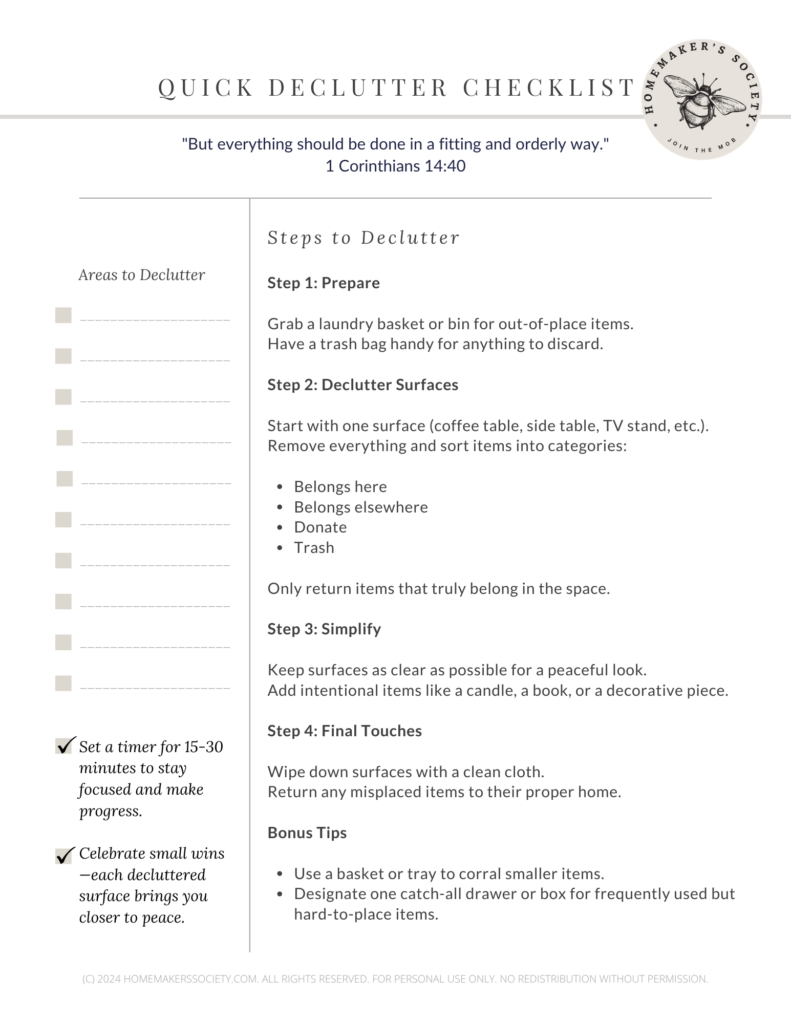
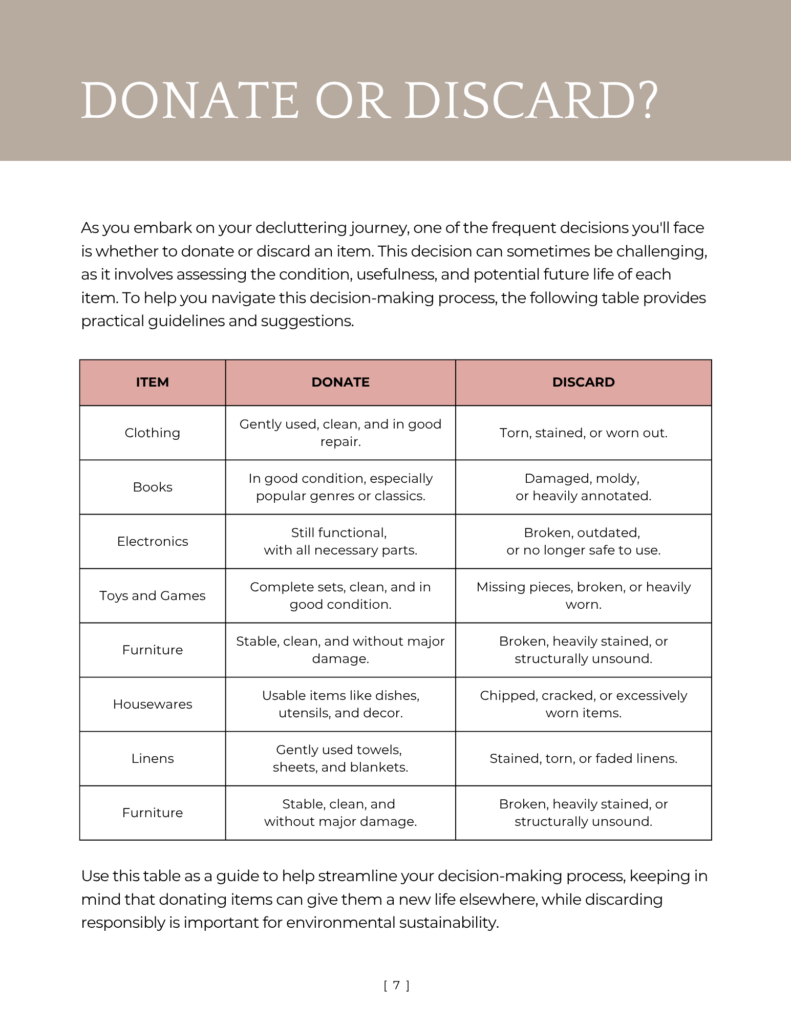
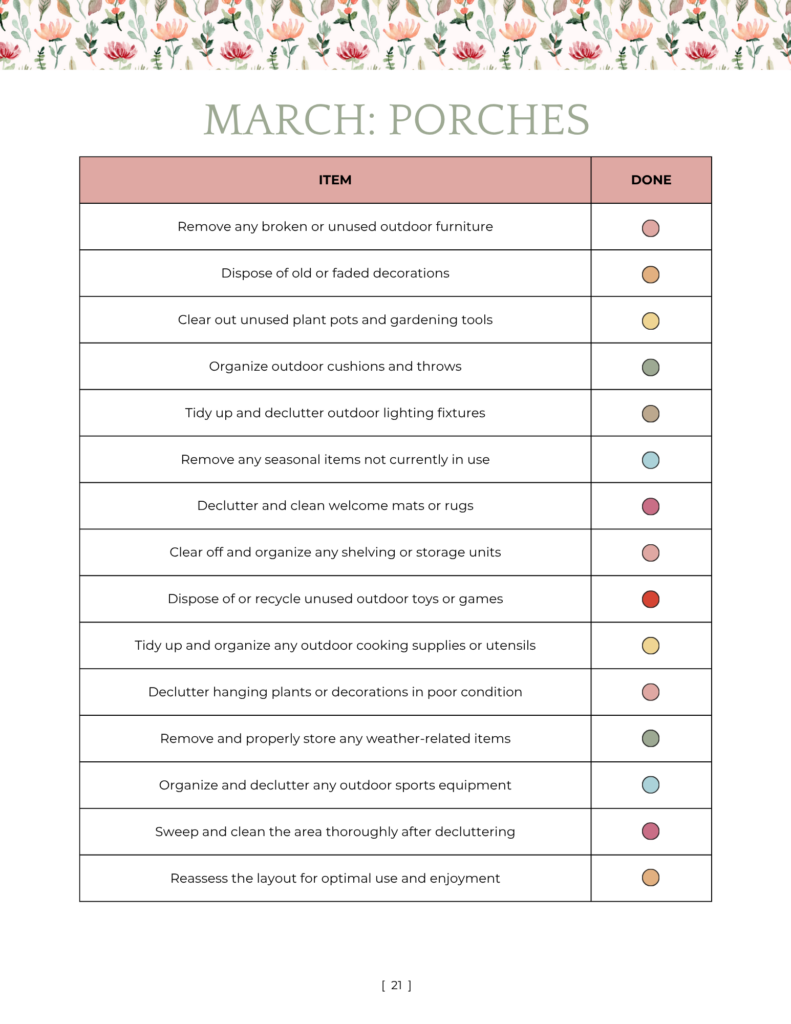
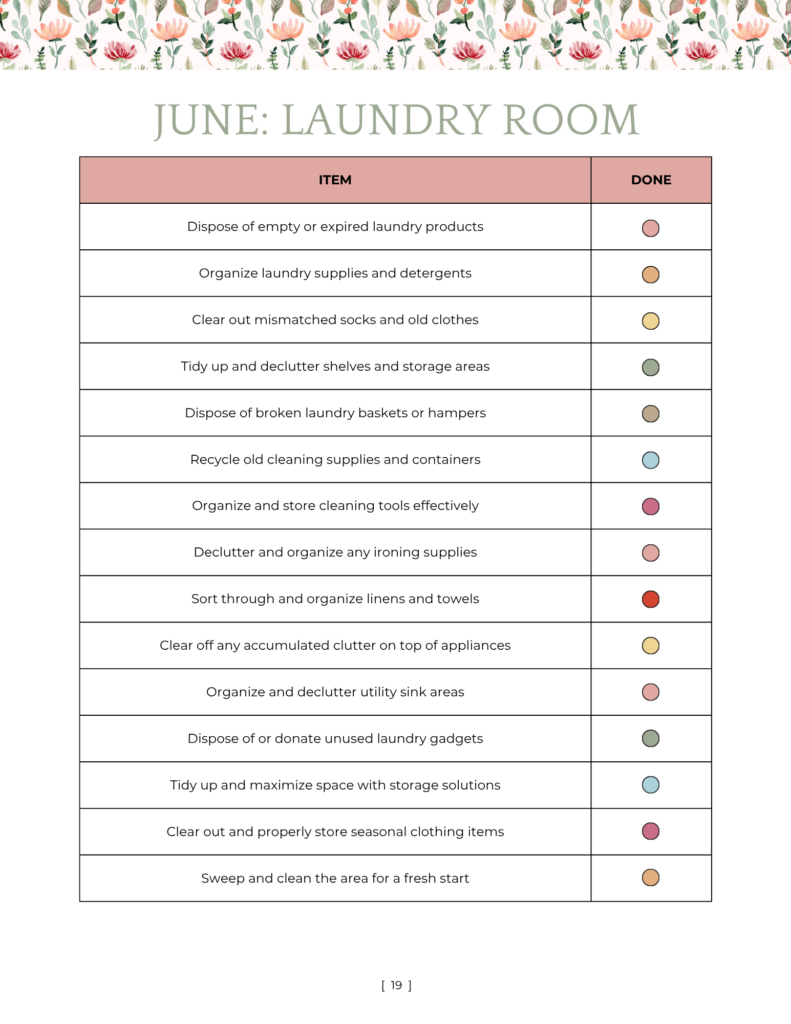
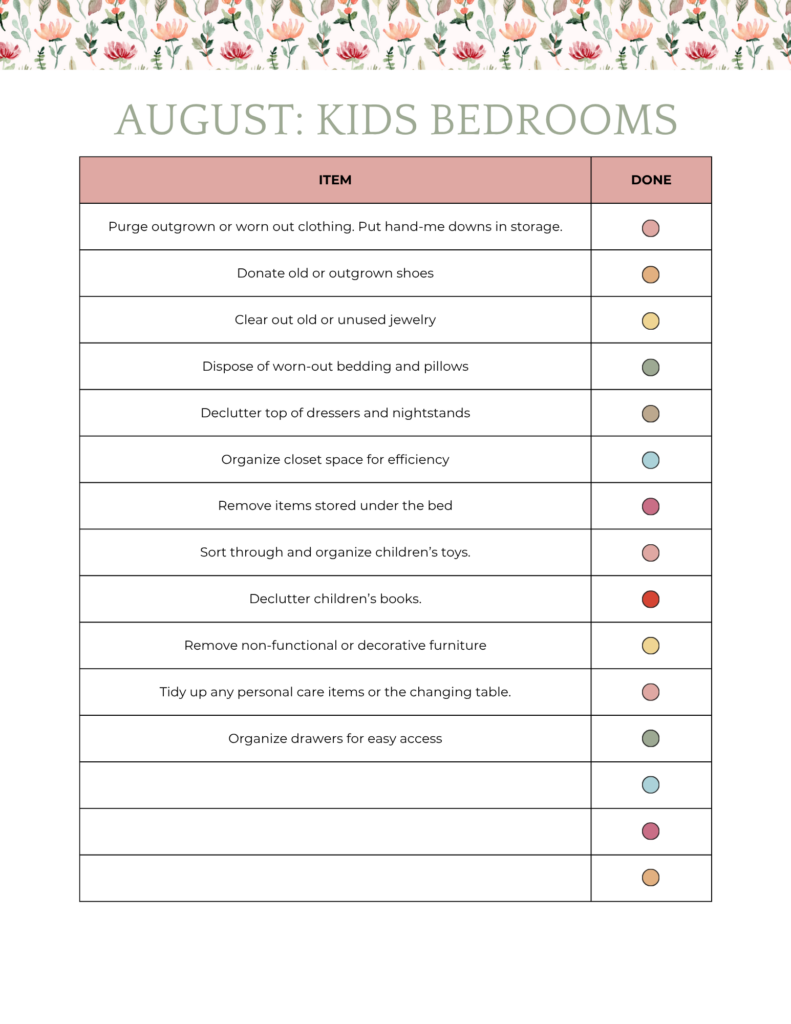
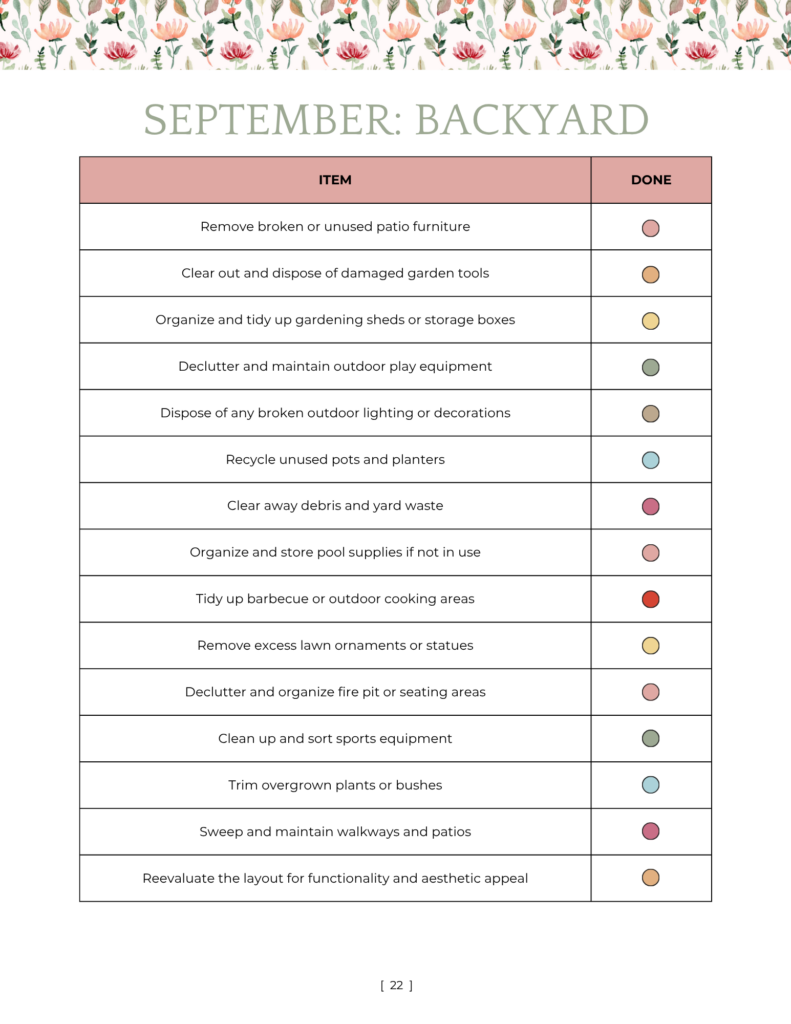
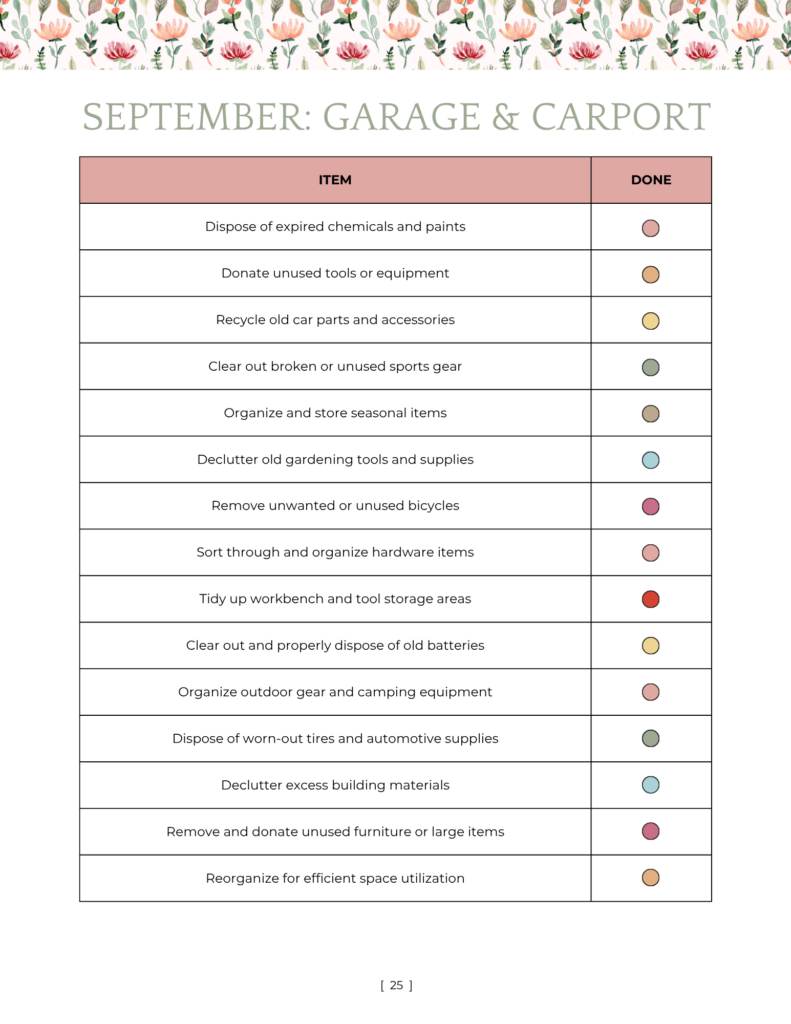
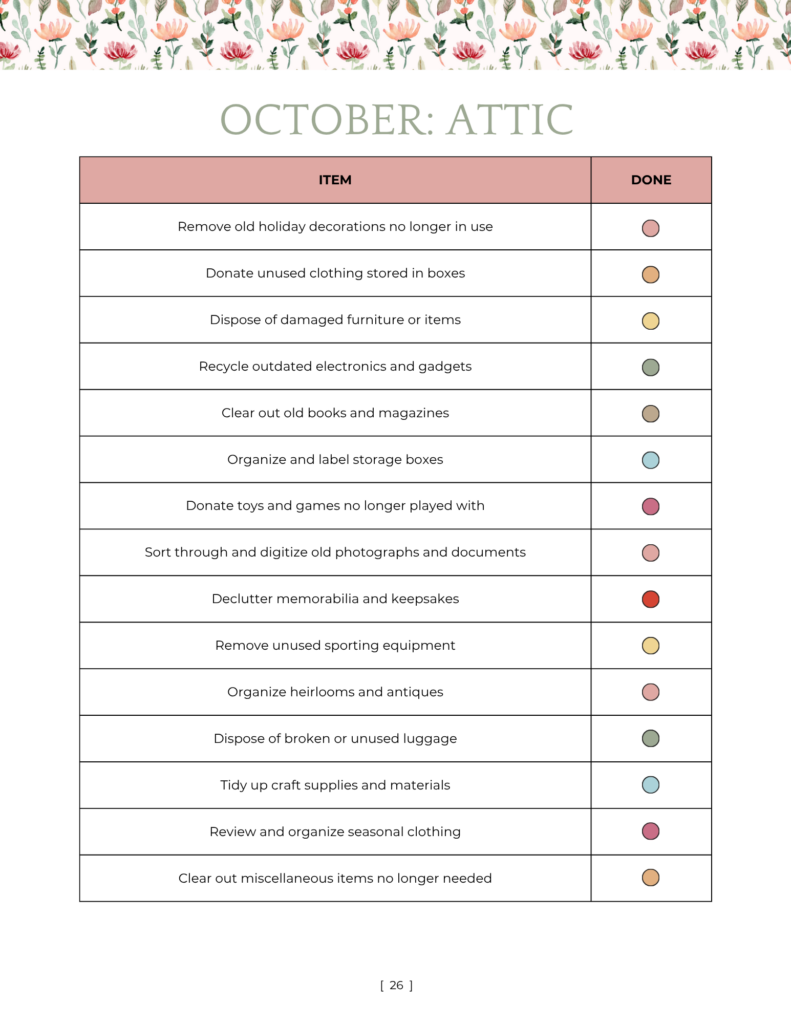
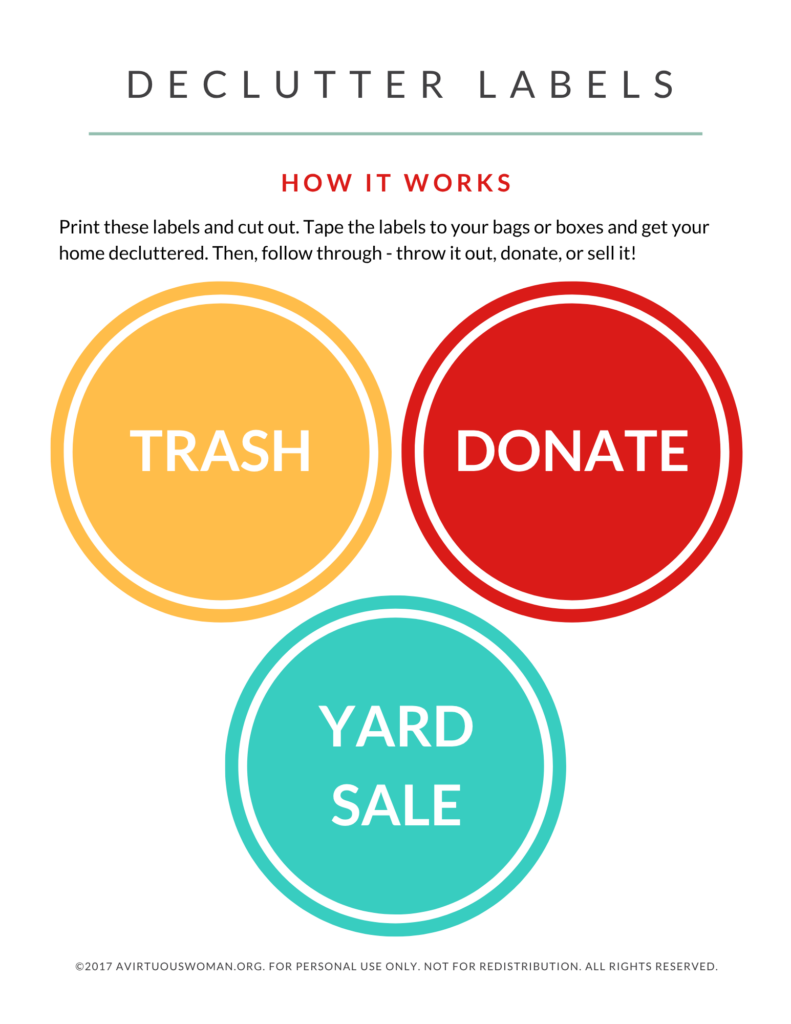
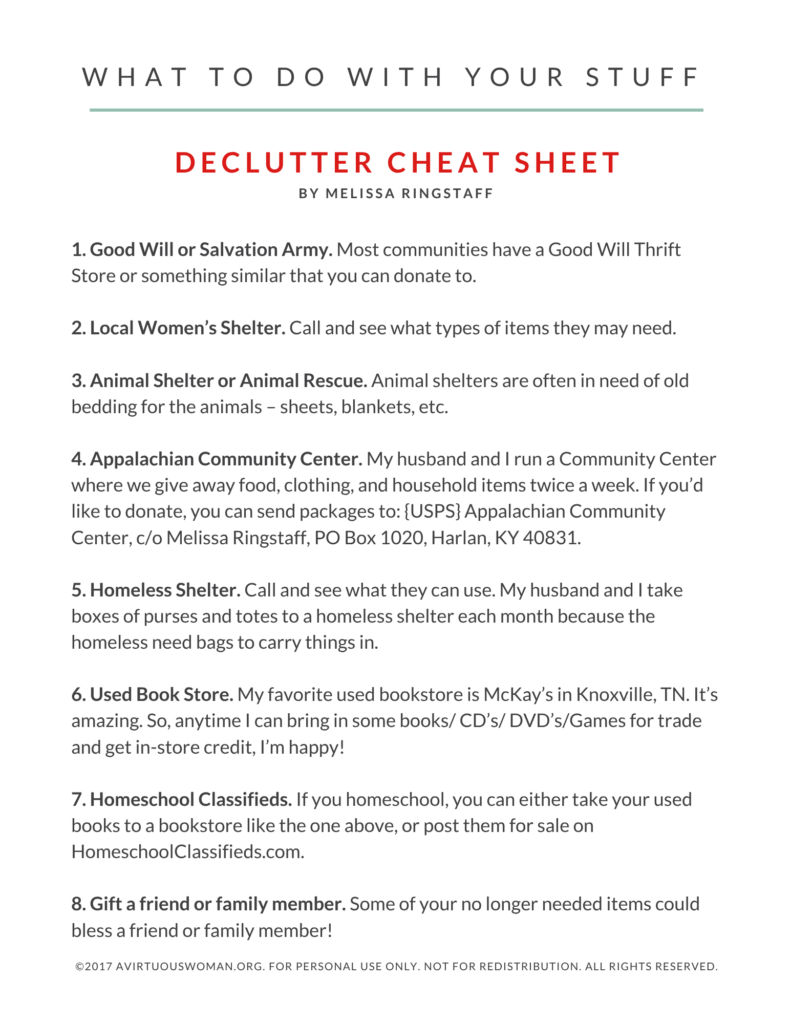
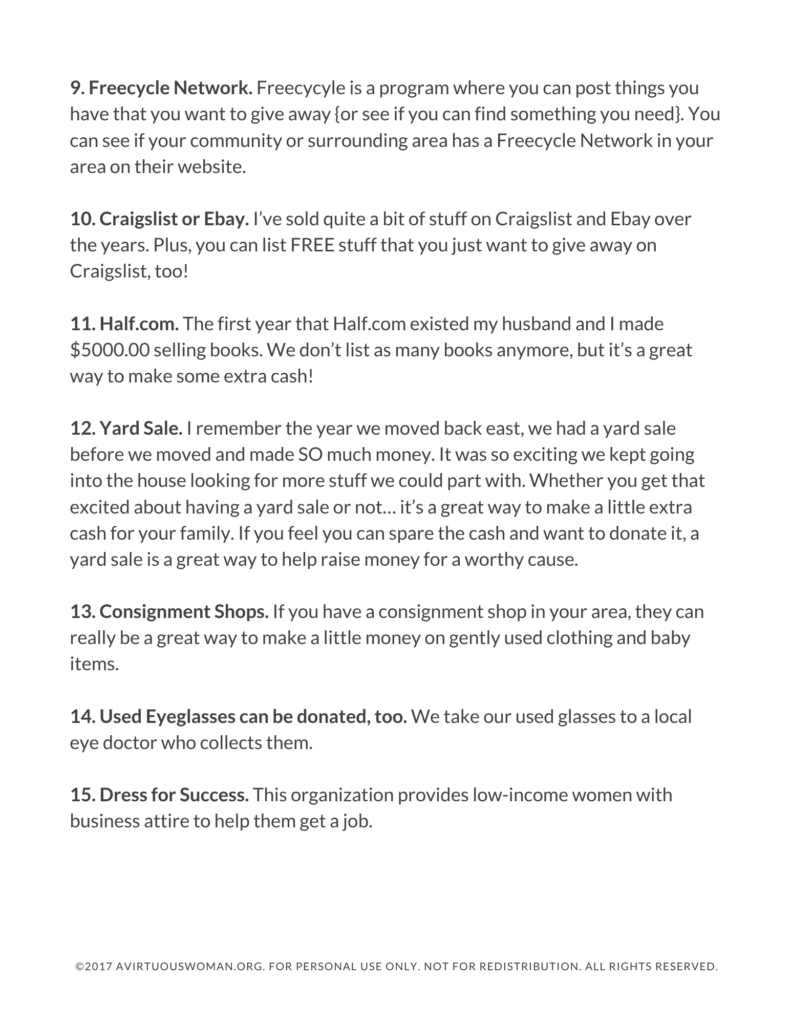
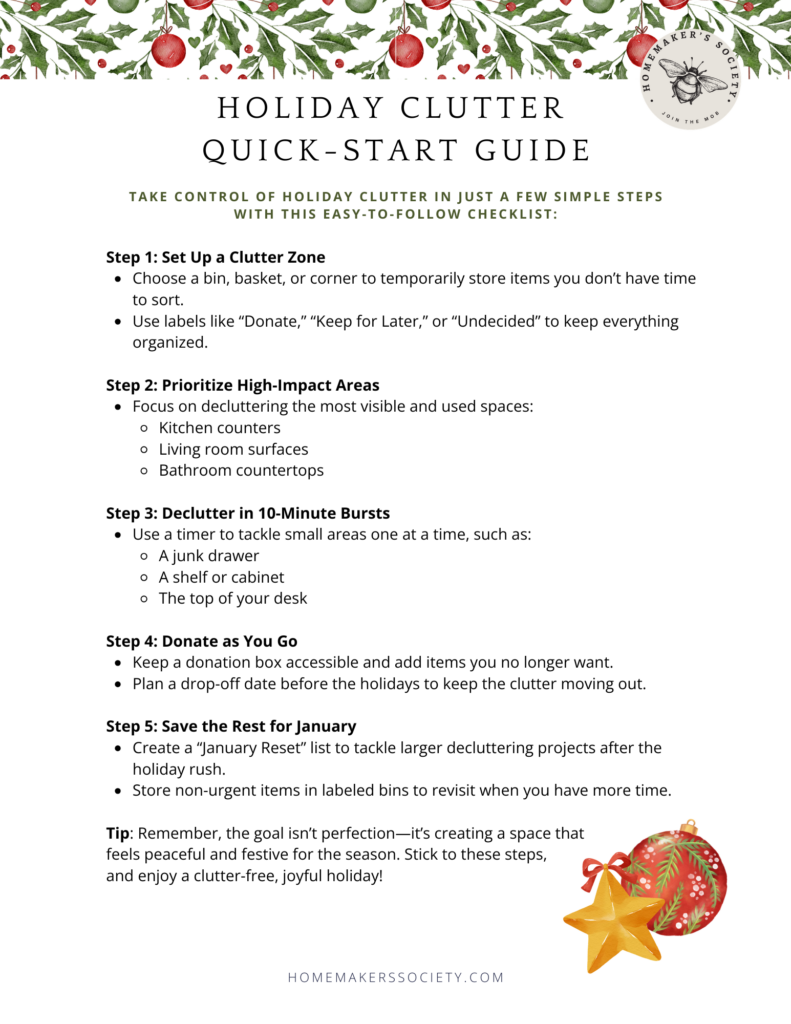
These aren’t just pretty pages. They give you a checklist to follow so you’re not making it up as you go, which means fewer decisions, less fatigue, and more finished areas.
Members Only: visit the Decluttering + Organizing section of The Fireside Room →
Not a member yet? You can join The Homemaker’s Society here and get instant access to everything inside.
One More Thing Before You Start
I know it can feel like the clutter is a sign of something — that you’re failing, or you’re behind, or you’re not the kind of person who can have an organized home.
You are exactly that kind of person.
The only difference between a cluttered home and an organized one isn’t personality — it’s practice. It’s the habit of finishing what you start, giving things a home, and doing the small daily reset that keeps things from piling up again.
You can do this. Start with one area. Finish it before you move on.
That’s all it takes to begin.
Sweet friend, your home doesn’t have to be perfect to be peaceful. It just has to have a little more order than it did yesterday.
Related: The Everyday Home Reset Workbook