10 Old-Fashioned Homemaking Skills Worth Bringing Back

Do you ever wonder what our grandmothers knew that we don’t? I just know that at some point a few decades ago, they decided that home economics, family consumer sciences, and consumer math were no longer going to be taught in our schools. So now we have entire generations of women who don’t really have a solid understanding of how to run a home and care for a family.
Today I’m sharing old-fashioned homemaking skills worth bringing back into your home — the kind of know-how that made our grandmothers’ homes run on less money, less waste, and a lot less panic.
Be sure to download the free printable Seasonal Rhythm Planner at the bottom of the post!
Old-Fashioned Homemaking Skills Worth Bringing Back
This isn’t a list for teaching your kids (I’ve already written that one — you can find it here). This is for us. The grown women who are running a household right now and could stand to know a few more things our grandmothers took for granted.
“She looks well to the ways of her household and does not eat the bread of idleness.” Proverbs 31:27
That verse isn’t about being busy for busy’s sake. It’s about competence. Knowing how to do things. Let’s get some of that back.
#1 Mending
We live in a society that has taught us that everything is disposable. Things are cheaply made, and we don’t value craftsmanship the way we used to. Buying well-made clothing, sewn from quality materials, is a great place to start changing that mindset. But no matter the clothing you own, you can extend the life of any garment by learning how to properly mend.
A basic mending kit and an evening of YouTube will fix most of that. I’m not a seamstress — but I can sew a button on and take up a hem, and that’s genuinely most of what you need. Knowing how to sew clothes is a great skill to learn, but for most of us, simply having the ability to mend your husband’s pants in a pinch will help you save money and care for the environment.
Keep a small basket for anything that needs fixing and sit down with it once a week while something’s playing on the TV or on a podcast.
#2 Preserving food
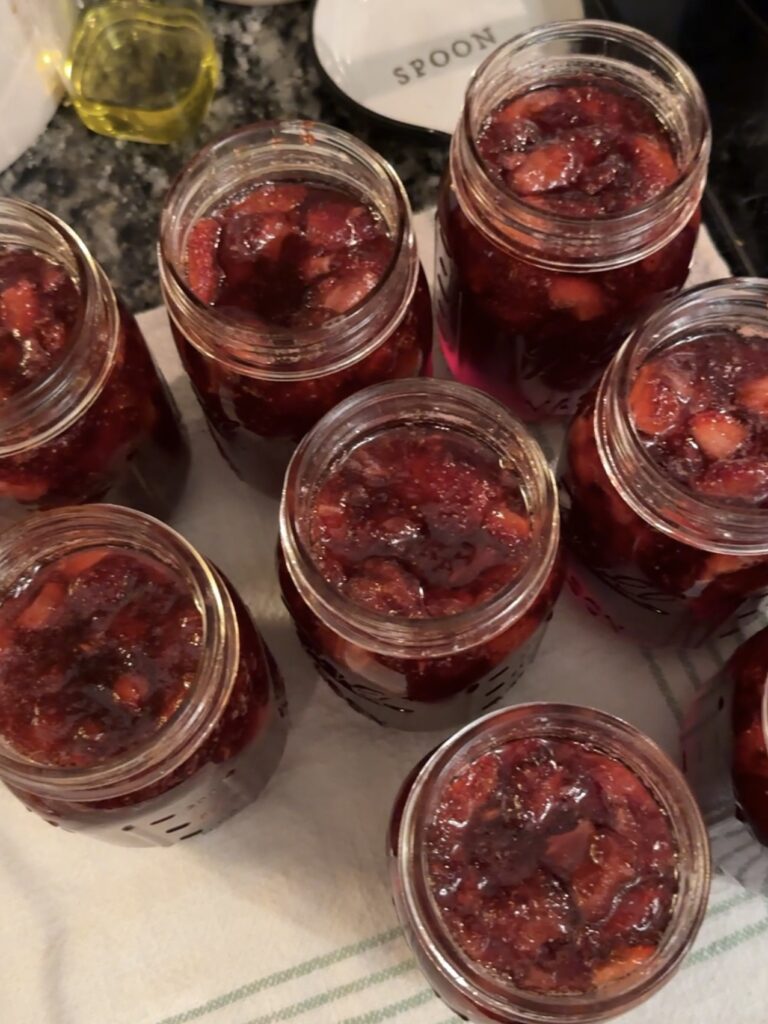
Canning intimidates people, and I understand why. But putting food isn’t as hard as you think and it’s a lot of fun once you get started! Freezing summer berries on a sheet pan. Drying herbs from a pot on the porch. Pickled cucumbers in a jar in the fridge that you eat within the month and never process at all.
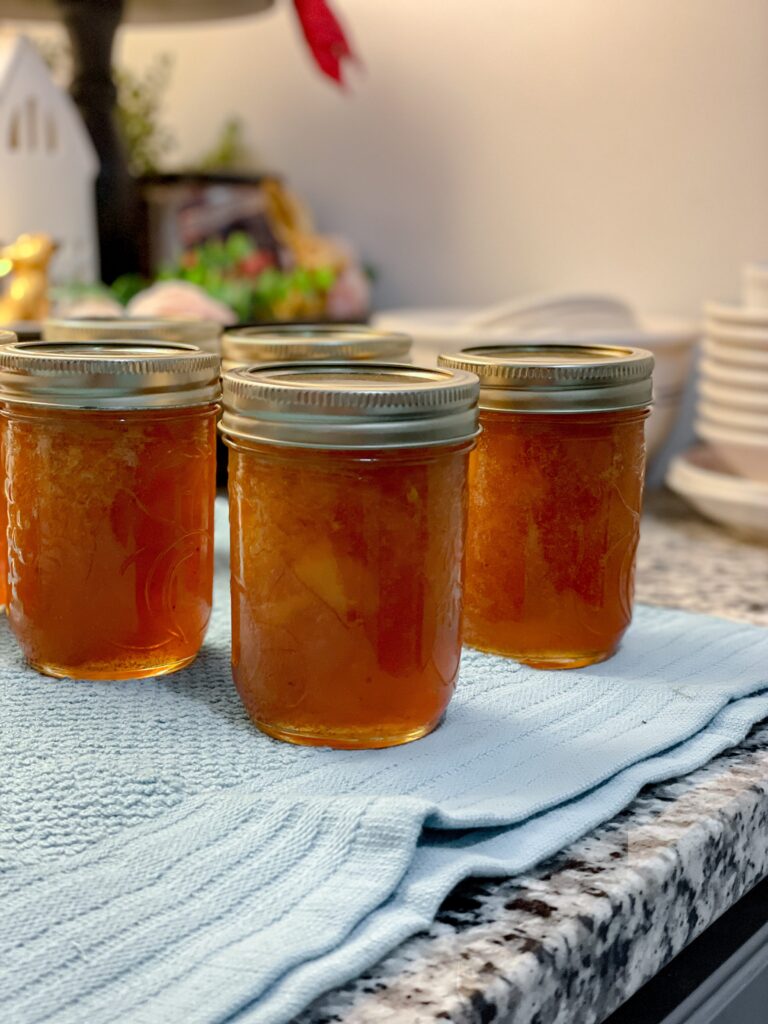
Start there. Water bath canning will still be there next summer. I love canning jams and jellies and even spaghetti sauce or beans. It’s really not that hard if you want to learn!
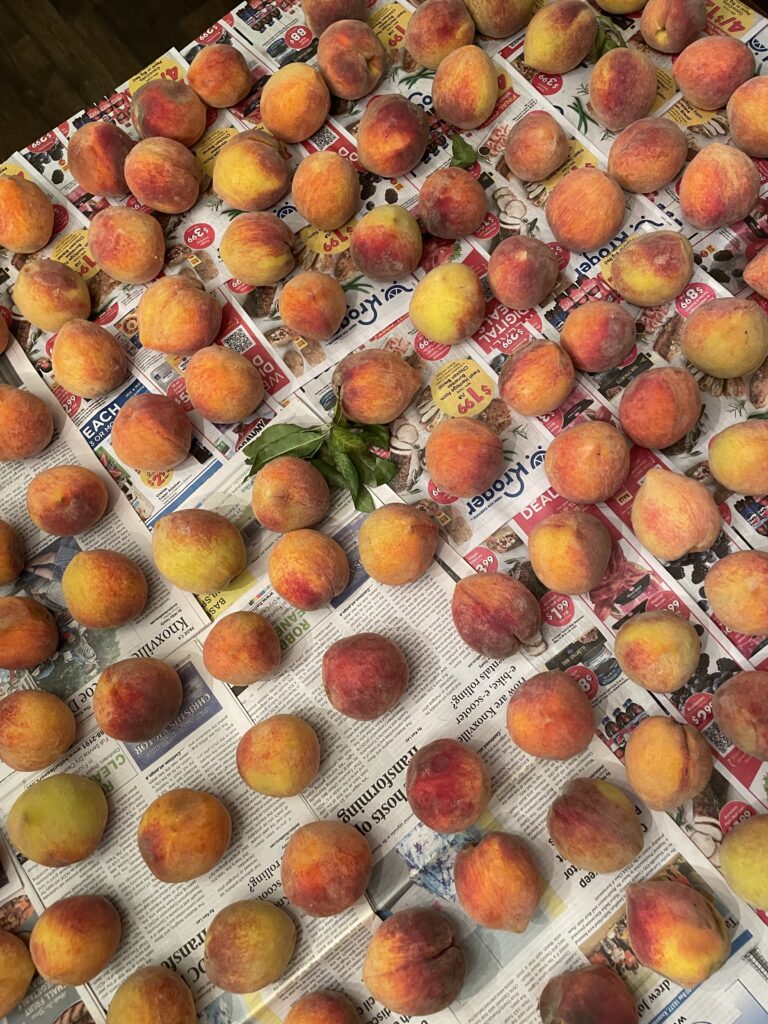
Every year my kids and I drive down to visit my parents in Georgia, where I grew up, and we all go pick peaches. My daughters have learned how to preserve and can food, so after our peach picking day we go home and put up all kinds of delicious jams, jellies, and preserves for the coming year.



#3 Keeping a Household Ledger
This is the one I think we’ve lost the most ground on, and it’s costing us more than we realize. It’s important for homemakers to know where they stand financially and to have a say in the budet.
Our great-grandmothers wrote down what came in and what went out. By hand. Every week. Not because they loved bookkeeping, but because a household is an economy, and you cannot steward what you don’t measure.
An app will track your spending. An app will not make you look at it. There’s something about writing the number down in your own hand that a notification just doesn’t replicate. But whether you use an app or a paper budget planner, knowing where your money is coming and going will help you build a financial legacy for your family.
If you’re a member of the Homemaker’s Society, be sure to check out the Wise Home specialty track inside the Homemaker’s Path, for you want your household finances to reflect your values and serve your family’s future. There are also lots of budgeting printables inside the member libraries as well!
You can even take a free quiz to see if the Homemaker’s Path will help you!
“She considereth a field, and buyeth it: with the fruit of her hands she planteth a vineyard.” Proverbs 31:16
related: Become a Member of the Homemaker’s Society
#4 Making Your Own Cleaners
Vinegar, baking soda, castile soap, and a lemon will handle most of what happens in a house. Although I have to say I really detest the smell of vinegar, so I use other options like rubbing alcohol, essential oils, and hydrogen peroxide.
I’m not a purist about it — there are jobs where I want to use bleach or hardcore cleaners, and that’s okay. But the daily surfaces, the counters, the mirrors, and the mopping? Essential oils, hydrogen peroxide, and water in a spray bottle, and you’ll never again store nine bottles under the sink where a toddler can reach them.
#5 Ironing and Pressing Properly
Knowing how to read a fabric care label, set the right heat, and press a collar or a hem so it actually looks pressed (not just warmed) is a skill our grandmothers considered basic. It still comes in handy for church clothes, job interviews, and the occasional wedding. Being able to send your husband out looking sharp in his pressed suit is worth the effort sometimes!
#6 Hospitality Without the Fuss
This isn’t a skill our grandmothers had to learn. Somewhere, we absorbed the idea that having people over requires a spotless house, a themed table, and a recipe we’ve never tried before. So we don’t have people over. We say “we should get together sometime” and mean it, but never do it.
The old way: the door’s open, there’s coffee, sit down. Company came, and the house was, however, the house was. This is how things work in my house. I love having people pop in.
“Use hospitality one to another without grudging.” 1 Peter 4:9
#7 Preserving Family Recipes
Not just cooking them — writing them down. In your own hand, with the little notes in the margins that only make sense to your family:
- “Add more than this if Daddy’s home.”
- “Double for the holidays.”
- “Laura’s favorite casserole.”
I even like to write little stories that go with a recipe in the margins, and I write notes in my cookbooks too.
A recipe box full of cards with actual handwriting on them, spattered and soft at the corners, becomes a family heirloom almost by accident. Nobody will cry over a printed-out Pinterest recipe forty years later.
#8 Basic Home Remedies
Before every ache sent us to urgent care, homemakers kept a working knowledge of what actually helps. Honey and lemon for a scratchy throat. A cool compress for a fever. Which teas settle a stomach and which oils ease a headache.
None of this replaces a doctor when you need one. But knowing the basics means you’re not helpless — or googling at 2 a.m. — every single time somebody in the house feels puny.
#9 Line-Drying Laundry
Sunlight bleaches whites and kills bacteria, plain and simple. Line-dried sheets last longer, too, since your dryer’s lint trap is really just a slow collection of your linens wearing away.
You don’t need a clothesline in the yard. A drying rack in a sunny room or your laundry room also works. A shower rod works. I’ve hung things on the backs of chairs with no shame at all.
#10 Keeping a Seasonal Rhythm
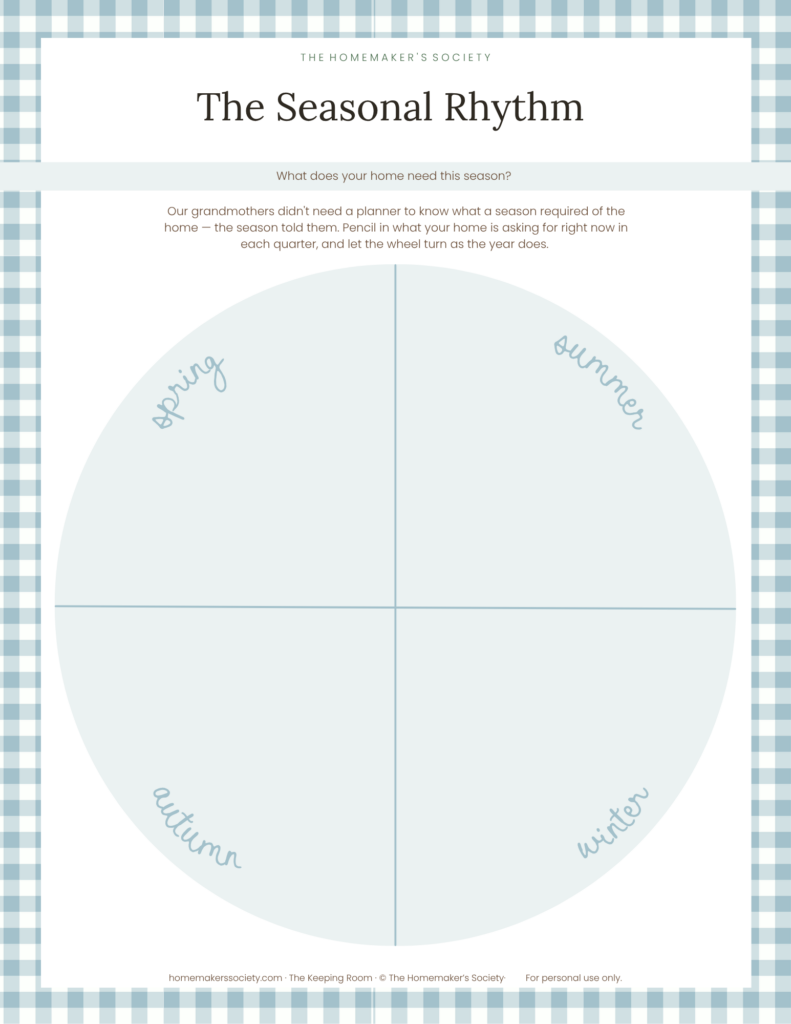
Our grandmothers didn’t need a planner to know that April meant spring cleaning, July meant putting up the garden’s bounty, and November meant the pantry got serious. The seasons themselves set the to-do list.
related: What to Clean and When: A Housekeeping Guide
We’ve traded that rhythm for a calendar that looks the same in every month. Getting some of it back doesn’t take much — just paying attention to what the season is actually asking of your home instead of what’s scrolling past on your phone.
Action Steps to Take Today
- Don’t try to start all ten at once — that’s how you end up doing none of them.
- Download the Seasonal Rhythm Planner below.
- Read back through this list and notice which one made you feel something. That reaction is information. It’s telling you what your home has been quietly missing.
- Pick that one. Do it for a month, let it become ordinary, then pick another.
- None of this is nostalgia for a world that was easier, because it wasn’t. Life was harder back then in ways I don’t want back. But those women knew how to make a home out of very little, and that knowledge is worth having — whether or not you ever need it.
Free Printable Seasonal Rhythm Planner
A simple one-page planner for keeping your home in step with the year.
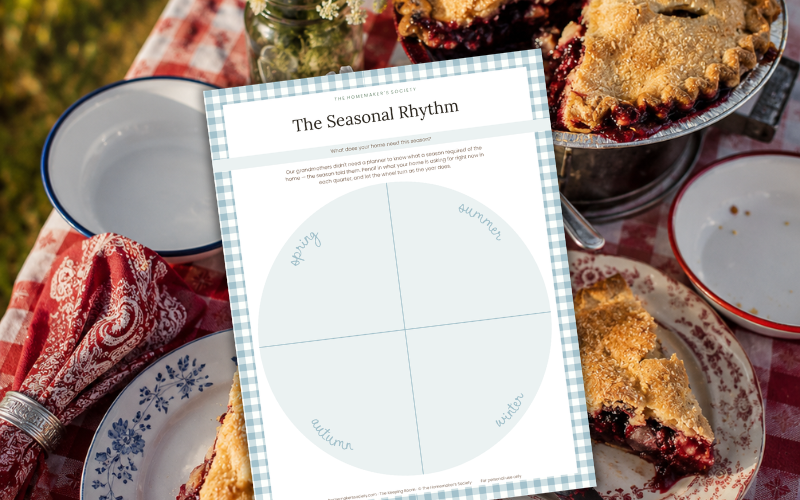
Our grandmothers didn’t need an app to tell them April meant spring cleaning and November meant the pantry got serious — the season told them. This little wheel works the same way. Four seasons, four quarters, and space to jot down what your home is actually asking for right now, instead of what a calendar notification says it’s the 9th of the month.
How to Download
Just fill out the form below and you’ll get this sweet little printable sent straight to your inbox.
Memembers Only Download
Come join us inside The Homemaker’s Society, where we walk through skills like these together with printables, routines, and a whole library built for exactly this kind of home. There’s a room full of women in there learning right alongside you.
Click the button below to become a member.





One Comment