The Gift of a Boring Summer (Why Kids Don’t Need to Be Busy)

It starts around the first week of June. The school backpacks are barely in the closet before I see it creeping into my feed — camp registration deadlines, summer activity schedules, enrichment programs, sports sign-ups. The message underneath all of it is quiet but persistent: a good mom fills her kids’ summer.
But after 35 years of homemaking and raising five children, I’ve come to think that a boring summer for kids might be the greatest gift we can give them.
What We’ve Been Told About Summer
Somewhere along the way, summer stopped being a season and became a project. A thing to optimize. A gap to fill before fall, with experiences and programs and structured play designed to make sure our kids don’t fall behind.
Behind what, exactly? We never quite ask that question.
I started homeschooling in 1998 — so for a very long time, summer was something I was right in the middle of, trying to figure out just like you are now. And the pressure to fill it, to justify it, to make it count — that was real then, too.
But I watched what happened when I let summer be summer. And I’m telling you from the other side: the boring summers were the ones my kids loved most. The ones they still talk about.
Boredom Is Not a Problem to Solve
Here’s what I learned from years of homemaking and raising children: boredom is not a symptom of poor parenting. It is a gift you give your child when you resist the urge to fix it. When a child says I’m bored, the cultural script says: find them something to do. Sign them up. Schedule something. Keep them busy.
But what if the right answer is: That’s okay.
Boredom is where imagination lives. It’s the silence before creativity speaks. A child who is never bored is a child who is always being entertained — and an entertained child is a passive one. They’re waiting for the next thing, the next activity, the next screen, the next input.
A bored child? That child is about to invent something.
Now I watch my grandchildren in the summer, and I see it play out all over again. The ones who have long, unscheduled stretches of time — they build things, they make up games, they disappear into their own imaginations for hours. It’s one of the most beautiful things I’ve ever seen.
What a Slow Summer Actually Looks Like
I want to be honest with you: a slow summer requires a certain amount of nerve on your part as a mother.
Because your kids will complain. At least at first. They will tell you there is nothing to do, and they will say it like it’s your fault. You will have a moment — probably more than one — where you second-guess yourself. Where you wonder if you should have just signed them up for that thing.
But don’t give in.
A slow summer at our house looked something like this:
Morning rhythm, loose and flexible. Wake up, breakfast together, some time outside or with a book before the day really gets going. We didn’t have a rigid schedule, but we had anchors — little touchpoints that gave the day a shape without over-structuring it.
Long afternoons with no agenda. This is where the magic happened. The forts got built. The mud pies got made. The friendships got deepened. Books got read for hours because there was nowhere else to be. We spent our days outside, at the lake, on mountain hikes, having picnics in the yard and at the park, or swimming in the pool.
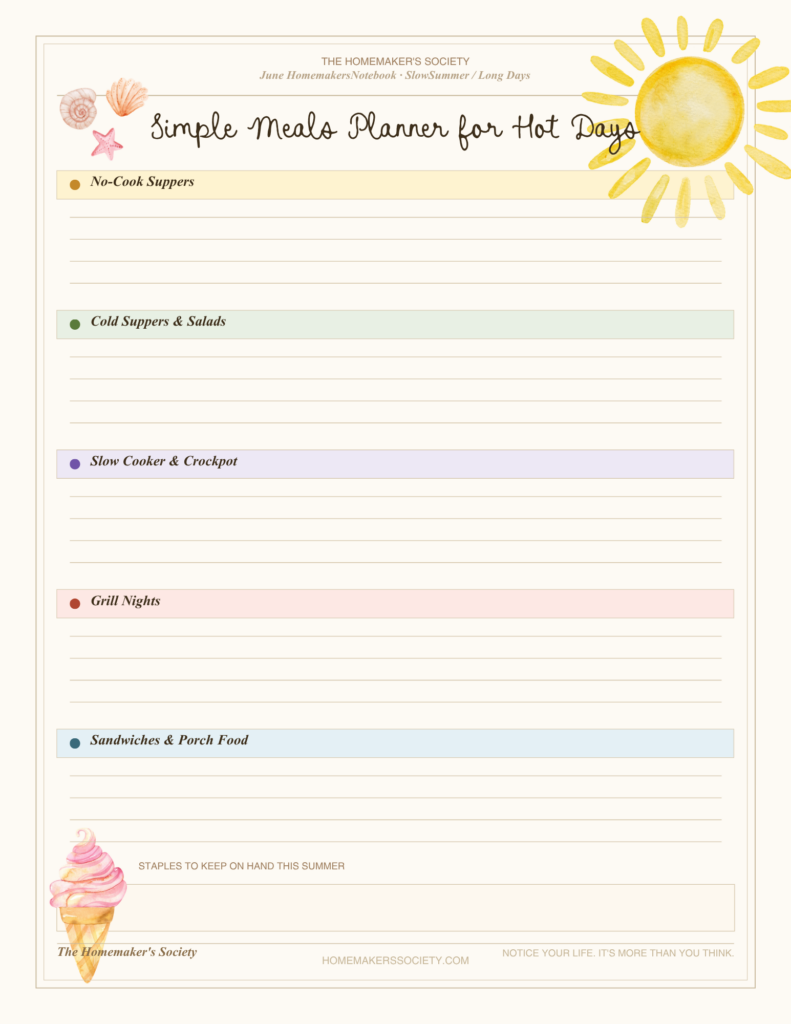
Simple meals that didn’t require me to be in the kitchen all day. Cold suppers, sandwiches on the porch, something in the crockpot. Summer cooking should feel like rest, not performance.
Evenings that slowed all the way down. Front porch time. Games. Early bedtimes that actually happened.
It wasn’t Instagram-worthy most days. It was just a childhood, unfolding at its own pace.
The Deeper Thing I Was After
When I think about what I wanted my children to remember about summer — the feeling I wanted to give them — it wasn’t a roster of activities. It wasn’t a list of camps and classes they attended (although we did do a week of summer camp every year).
It was the feeling of a house that was calm. A mom who wasn’t frantic. Long summer days that felt long in the best way, not because they were crammed full, but because time was moving slowly the way time is supposed to.
I wanted them to remember home as the place where summer happened. That’s worth protecting, even when the world is telling you to fill every hour.
A Simple Rhythm for Your Summer Days
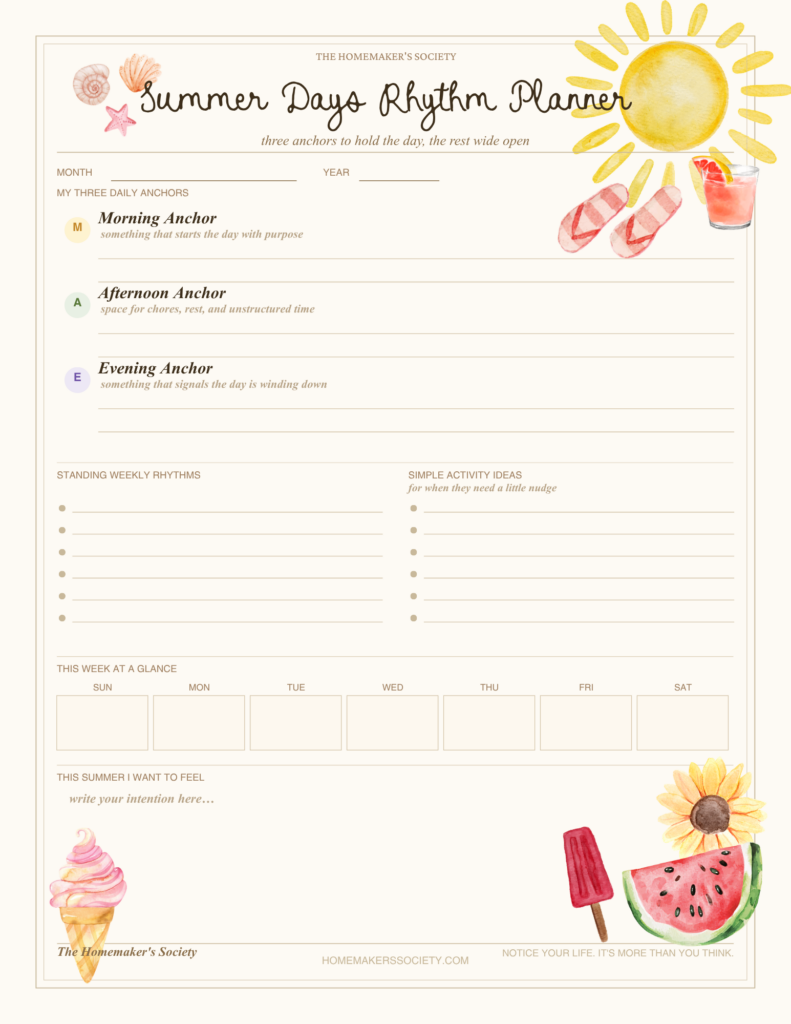
If you want a little structure without a schedule, try building your summer days around three simple anchors:
A morning anchor — Something that starts the day with a sense of purpose. A walk, time with your Bible, breakfast together at the table, tending the garden. It doesn’t have to be long. It just has to be intentional.
An afternoon anchor — Something that gives your kids a loose framework for the long middle part of the day. A simple chore or two, a quiet rest time, unstructured outdoor time. Let them be bored. Let them figure it out.
An evening anchor — Something that signals the day is winding down. A simple supper, a walk, reading together, front porch time. Something unhurried.
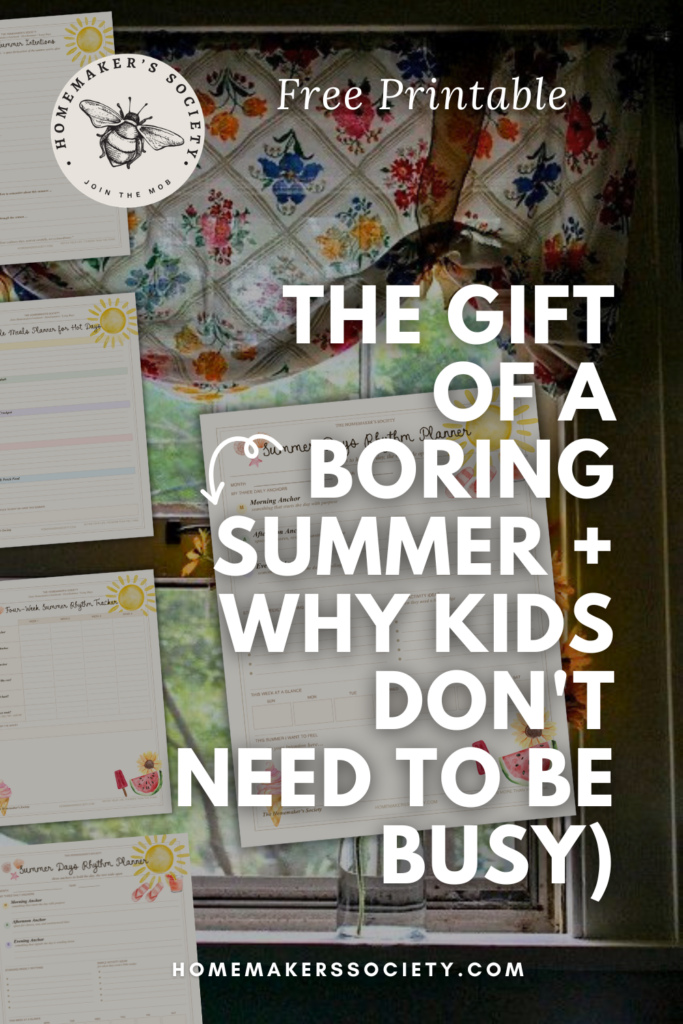
Your Free Printable: The Summer Days Rhythm Planner
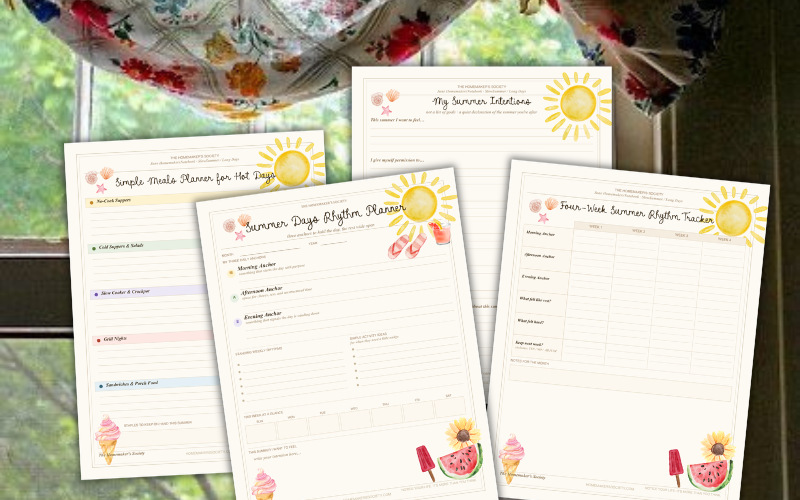
To help you build this into your summer without over-complicating it, I created a free printable Summer Days Rhythm Planner — a simple one-page planning sheet (the first page in the set above) where you can map out your three daily anchors, add any standing weekly rhythms (library day, farmer’s market, Sunday church), and keep a short list of simple activities for when your kids need a little nudge.
It’s not a schedule. It’s a rhythm — and there’s a difference.
How to Download
Just fill out the form below to receive your free printable.
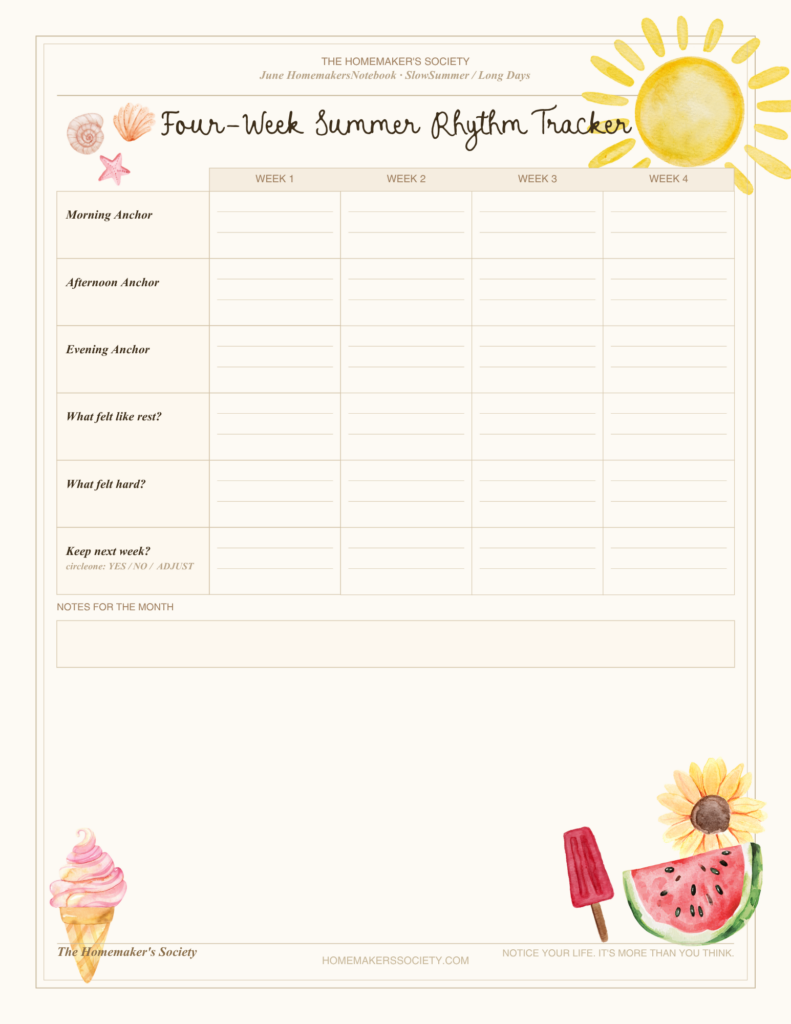
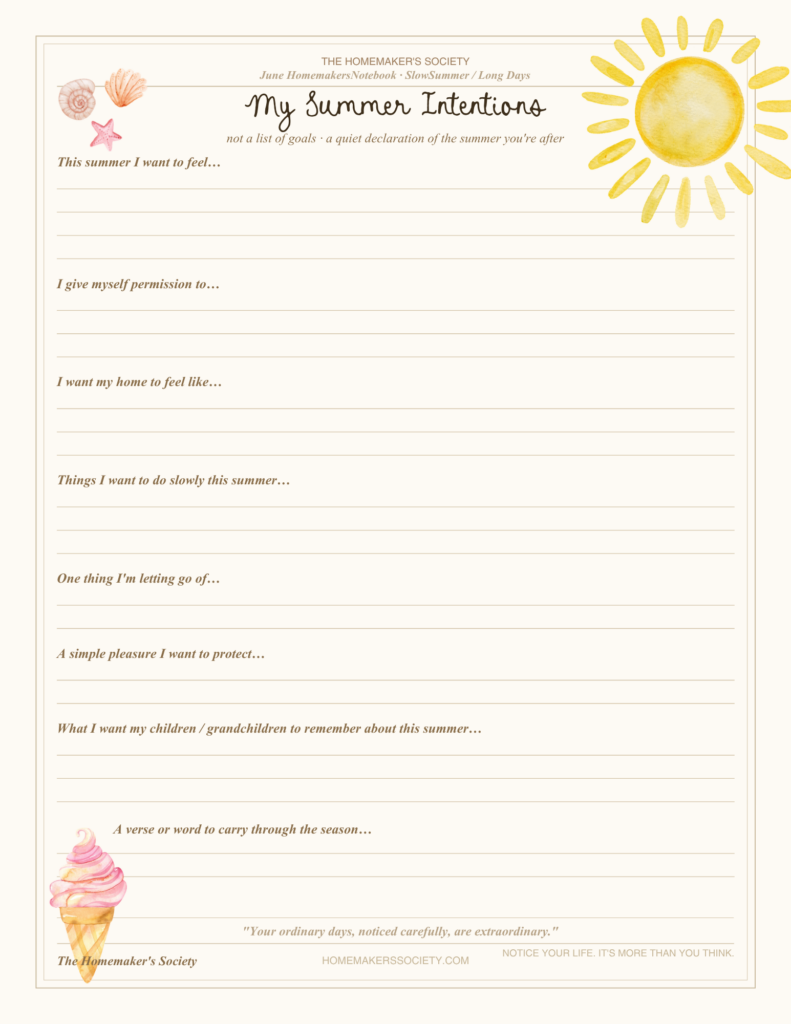
Already a member of The Homemaker’s Society? Your full June Homemakers Notebook includes an expanded summer planning section with a four-week rhythm tracker, a simple meals planner for hot days, and a summer intentions page. Log in to access it below.
Members Only Download
You Are Enough. Your Home Is Enough.
If you’re reading this and feeling a little bit of relief — like maybe you don’t have to do all the things this summer — I want you to know that feeling is trustworthy. I’ve been a homemaker for over 35 years. That feeling never led me wrong.
Your kids don’t need to be busy. They need to be home.
They need a mother who is present, not performing. A house that feels like rest. Summers that feel like summers.
The gift of a boring summer isn’t a lack of anything. It’s the presence of everything that matters.
Want more encouragement for your slow summer? The June Handbook inside The Homemaker’s Society is all about Slow Summer / Long Days — it includes a four-week homemaking rhythm, a personal letter, and printable planning pages designed to help you protect the pace of your home this season. Join the membership here →