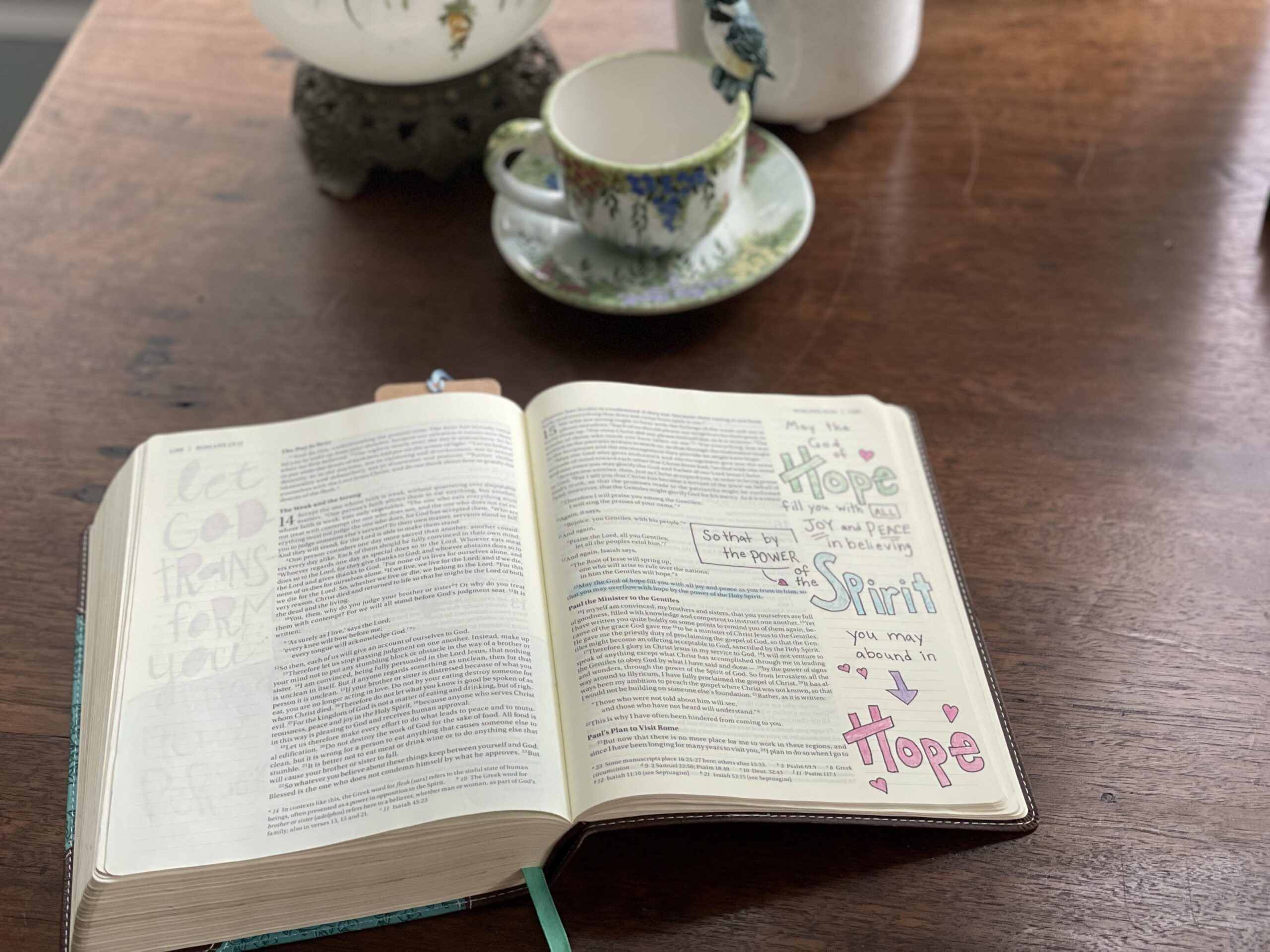
Homemaking as a Calling — When the Work Becomes Worship

Homemaking as a calling looks different from homemaking as a duty — and after 35 years, I can tell you the difference changes everything about how the work feels.
I’ve been a homemaker for over 35 years. I’ve swept the same floors thousands of times. Made the same pot of my mama’s bean soup every fall for my entire homemaking career – I’ve never known life without it. Folded laundry in the same living room through seasons of babies and toddlers and teenagers, and now an empty nest that still somehow fills back up on the daily.
And somewhere in the middle of all that ordinary, repeated, unglamorous work — something shifted.
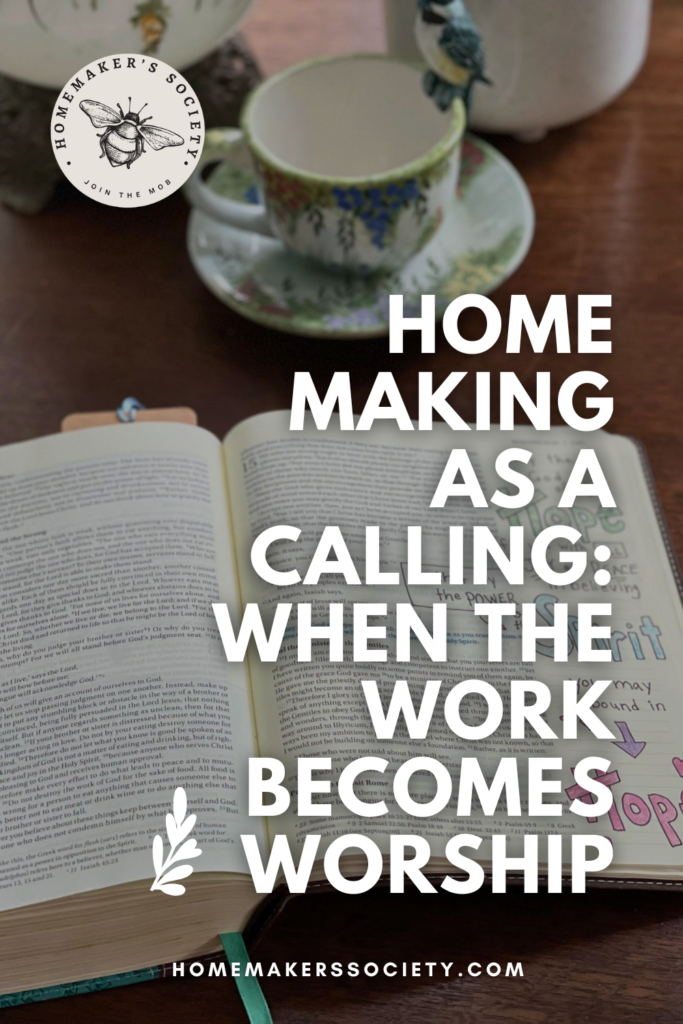
At some point when I was a young mom, I knew I wanted to be a better homemaker and I felt called to pursue better systems and get more organized, but in my heart I knew that deep down it wasn’t about how well I cleaned or decluttered and it wasn’t about how well I kept my house tidy. It was about believing with all of my heart that caring for my family in very real and tangible, practical ways mattered.
Homemaking as a calling is what I want to talk about today. Not homemaking as a job, or a duty, or a lifestyle choice. The calling — the place where the work of the home and the life of faith become, quietly and without fanfare, the same thing.
The Difference Between Duty and Calling
Most of us start homemaking out of necessity. Someone has to do it. The house needs to run. The children need to be fed, the laundry needs to be done, and the bills need to be paid. We do it because it’s ours to do. That’s duty, and duty is absolutely honorable — don’t let anyone tell you otherwise.
But a calling is something else. Calling is when you do the same work duty requires, but you understand why it matters in a way that goes deeper than necessity.
When you make the bed, not just because unmade beds bother you, but because order in the home is an act of love for the people who live in it.
When you cook dinner from scratch not just to feed hungry people but because gathering around a table is one of the places God shows up in ordinary life.
When you tend your home not as maintenance but as stewardship — because this place, these people, this daily work was given to you, and it is worth giving your whole self to.
Colossians 3:23 says, “Whatever you do, work at it with all your heart, as working for the Lord, not for human masters.”
I’ve read that verse a thousand times. But I want to be honest — it took me years to really feel the weight of it in the context of homemaking. To understand that “whatever you do” includes sweeping the floor. Making the bed. Washing the dishes again, for the ten thousandth time.
God sees this work. He honors it. It is not invisible to Him even when it feels invisible to everyone else. And I say it all the time: God sees the unseen work of your hands.
What Calling Actually Looks Like in Practice
I think when women hear “homemaking is a ministry” or “homemaking as a calling,” some of them picture a woman who floats serenely through her home, content and joyful and never frustrated, who finds deep spiritual meaning in every load of laundry. And that’s not really how it works. It hasn’t worked that way for me, anyway.
What homemaking as a calling actually looks like is simpler and more ordinary than that.
It looks like choosing on a Tuesday afternoon when you’re tired, and nobody has said thank you, but you do the work well anyway. Not because you feel inspired but because you know it matters.
It looks like praying while you cook. Not a formal prayer, just talking to God while your hands are busy — which is, if you think about it, what the women in Scripture did. Their work and their faith were not two separate things. They happened together, in the same space, at the same time.
“Give her of the fruit of her hands, and let her works praise her in the gates.” Proverbs 31:31 ESV
It looks like reading the Word in the morning before the house wakes up. Not because you have to, but because you’ve learned that a morning without the Word makes the whole day feel different – and not in a good way.
It looks like Scripture on the wall, and prayers said over the children at bedtime and grace at the table that means something, rather than just words that get said before dinner. It looks like a home where faith is woven into the fabric of ordinary life so naturally that your children absorb it without being taught it formally — they just know, because they grew up breathing it.
That’s calling. It’s not a feeling. It’s a decision, repeated daily, to treat this work as holy.
The Home as a Place of Ministry
I have thought for a long time that the home is one of the most overlooked places of ministry in the church. We send missionaries overseas and we support food pantries and we organize service projects, and all of that is good. But there is ministry happening every single day inside the walls of a home that tends its people well.
When you welcome someone into your home and feed them and let them feel known and cared for — that is ministry. When you create an atmosphere of peace where your family can rest and be restored — that is ministry. When you raise children who know what it feels like to be loved consistently by people who keep showing up, who keep making the soup and folding the laundry and saying the prayers — you are forming souls. That is the deepest ministry there is.
Titus 2:5 calls women to be “working at home” — not as a limitation but as a location. The home is your post. It is where you are stationed. And like any post worth keeping, it requires showing up every day, whether you feel like it or not, whether anyone notices or not, whether the work feels meaningful or feels like drudgery. If you’ve ever wrestled with what the role of a homemaker really means, that post is worth reading before you go further.
On the drudgery days, this is what I come back to: the work is the same whether it feels meaningful or not. The floor is still clean whether I swept it resentfully or prayerfully.
Faith Woven Into the Home
Stage 5 of The Homemaker’s Path is about making that integration real and lasting — not a one-time inspiration but a daily practice.
It starts with the Word. I am a firm believer that a homemaker who is in the Word regularly is a different kind of homemaker. Not because reading the Bible makes your house cleaner or your children better behaved (though I’ve noticed it tends to make me a better mother and wife when I do it consistently).
But because God’s Word reminds you of what the work is for. It puts the Tuesday afternoon frustrations in its proper place.
If you’re just finding your footing in this, this post on how to be a homemaker has a free worksheet that walks you through examining your heart and your attitude toward the work — it’s a good companion to what we’re talking about here.
It grows through prayer. Not prayer as a formal discipline only, but prayer woven through the day — over the children, over the home, over the work, over the hard things and the beautiful things alike. A “Pray without ceasing.” (1 Thessalonians 5:17) kind of life.
It deepens with Scripture memory and writing. When you have God’s Word in your heart, it comes to you in the middle of the hard moments. When a situation is difficult, and you don’t know what to do, you find that a verse you wrote out six months ago is suddenly present and useful. That’s the Spirit working through the Word you stored up.
And it anchors in community. None of this happens well in isolation. We need women around us who understand what this life is, who take it seriously, who will encourage us when we’re discouraged and call us forward when we’re tempted to give up on the whole thing. That’s what this community is for. That’s what The Keeping Room exists to be.
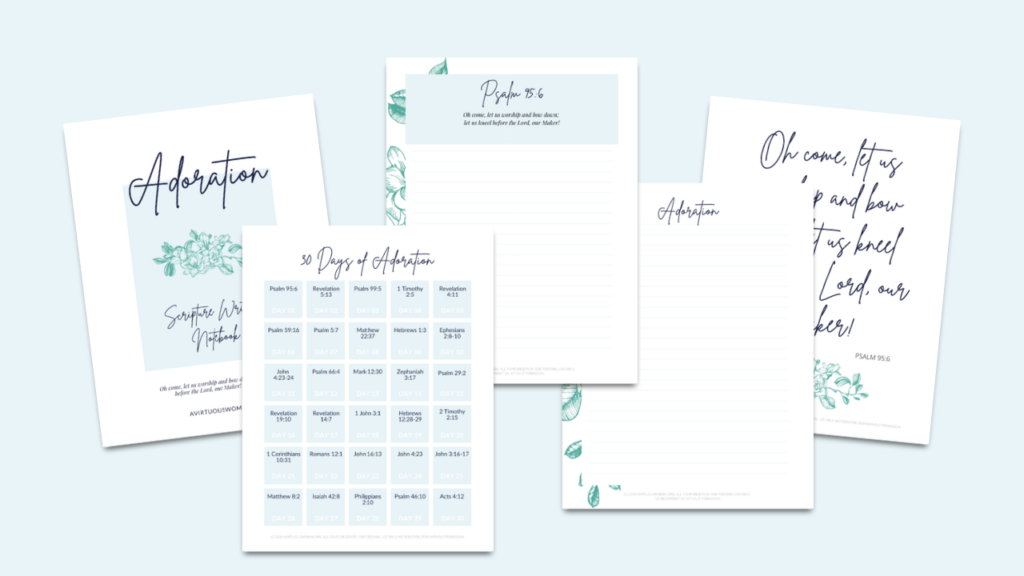
Inside the members-only Faith Library, you’ll find lots of different scripture writing pages and prayer journals you can print!
You’ve Come a Long Way
If you’ve worked your way through Stages 1 through 4 before arriving here, I want you to pause for a moment and notice where you are.
Your mornings have a rhythm. Your week has a shape. Your home has systems that run without you having to think so hard. You’ve opened your door and let people in. You’ve started traditions your family will carry forward. You’ve made your home beautiful and tended something living and marked the seasons as they pass.
That is not a small thing. That is a home that has been built with intention over time. And now you’re here, at Stage 5, where all of that good practical work gets rooted in something eternal.
The Calling doesn’t end. You don’t arrive at Stage 5 and graduate. You just go deeper. The work is the same — the sweeping, the cooking, the laundry, the prayers. But underneath it all is a quiet certainty that the work is holy. That it matters. That the God who sees everything sees this too, and calls it good.
Sweet friend, that’s enough to keep going. On the hard days and the beautiful days and all the ordinary days in between — it’s enough.