
How to Build a Simple Home Budget (When You’ve Never Had One)

There is a specific kind of anxiety that lives in not knowing: Not knowing if the money will stretch to the end of the month. Not knowing what the bills actually total. Not knowing where it all went when Friday comes, and the account is lower than you expected. That low-grade hum of financial unease that follows you through the grocery store, second-guessing every item in the cart.
A budget doesn’t fix everything. But it does fix the not knowing. And that alone is worth the afternoon it takes to build one. I want to walk you through how to easily build your own home budget without making it harder than it needs to be.
How to Build a Simple Home Budget
Before we talk about how to build one, let’s talk about why they fall apart.
Why Most Home Budgets Fail
Most budgets fail because they’re built on optimism instead of honesty. We write down what we wish we spent on groceries instead of what we actually spend. We forget the irregular expenses — the car registration, the back-to-school supplies, the Christmas gifts — until they show up and blow the whole month. We build a beautiful plan and then don’t look at it again until something goes wrong.
A budget that works isn’t about discipline. It’s about information. Know what comes in. Know what goes out. Know where the gaps are. That’s it.
Proverbs 31:16 tells us the virtuous woman “considers a field and buys it.” She’s not impulsive or anxious. She looks, she calculates, she decides. That’s what a budget gives you — the ability to look, calculate, and decide rather than react.
Step One: Know What Comes In
This sounds obvious but it’s where most people skip. Before you can plan anything, you need to know your actual monthly income — not your salary, but what actually hits your account after taxes and deductions.
If your income varies month to month — which is true for many homemakers whose households run on commission, seasonal work, or self-employment — use the lowest month of the last three as your starting number. Plan for less and let any extra be a bonus, not a necessity.
Write that number down. That’s the top of your budget.
Step Two: Know What Goes Out
This is the part that surprises most people. Not the big bills — most of us know those. It’s everything else.
Start with your fixed expenses — the ones that are the same every month:
- Mortgage or rent
- Car payment
- Insurance
- Subscriptions
- Utilities that are on a budget plan
These go in first because they’re non-negotiable.
Then add your variable necessities — groceries, gas, household supplies, medical.
These fluctuate but they’re not optional. If you’re not sure what you actually spend in these categories, go back through last month’s bank or credit card statements and add it up. The number will probably surprise you. Just remember, you’re looking for information, not failure.
Then add your irregular expenses — the things that don’t show up every month but always show up eventually. Car registration, doctor visits, school supplies, home repairs, gifts, Christmas.
Divide each one by 12 and set aside that amount monthly. This is what a sinking fund is — money you park ahead of time so the irregular expenses don’t feel like emergencies when they arrive.
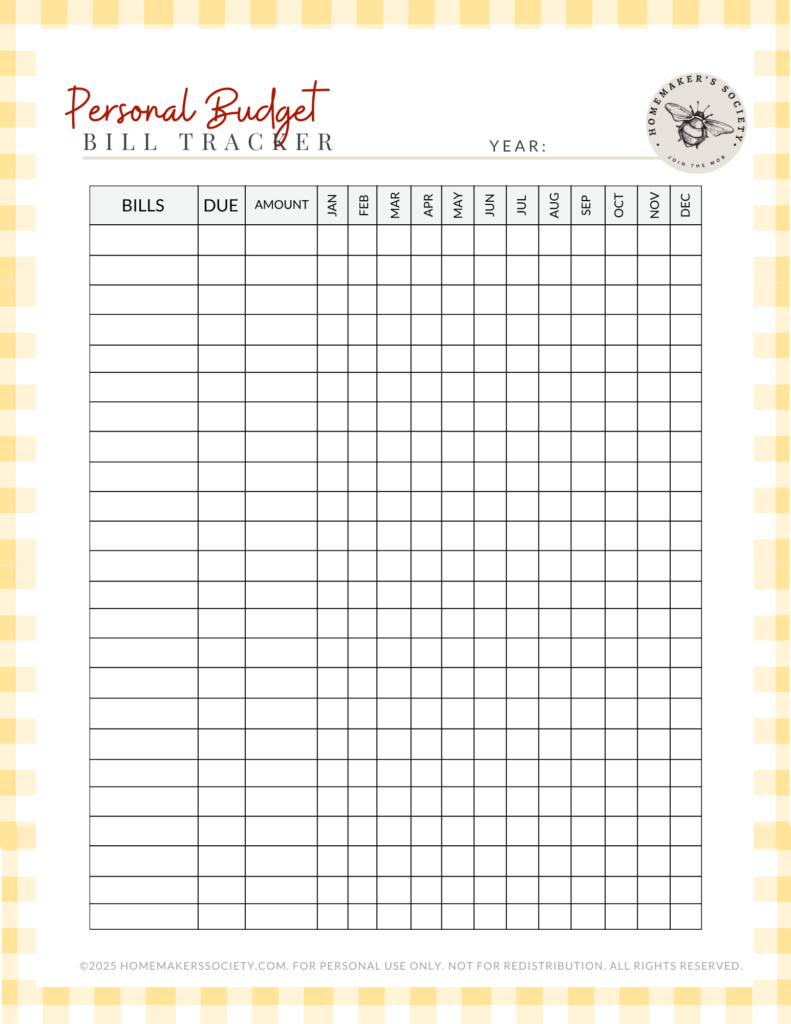
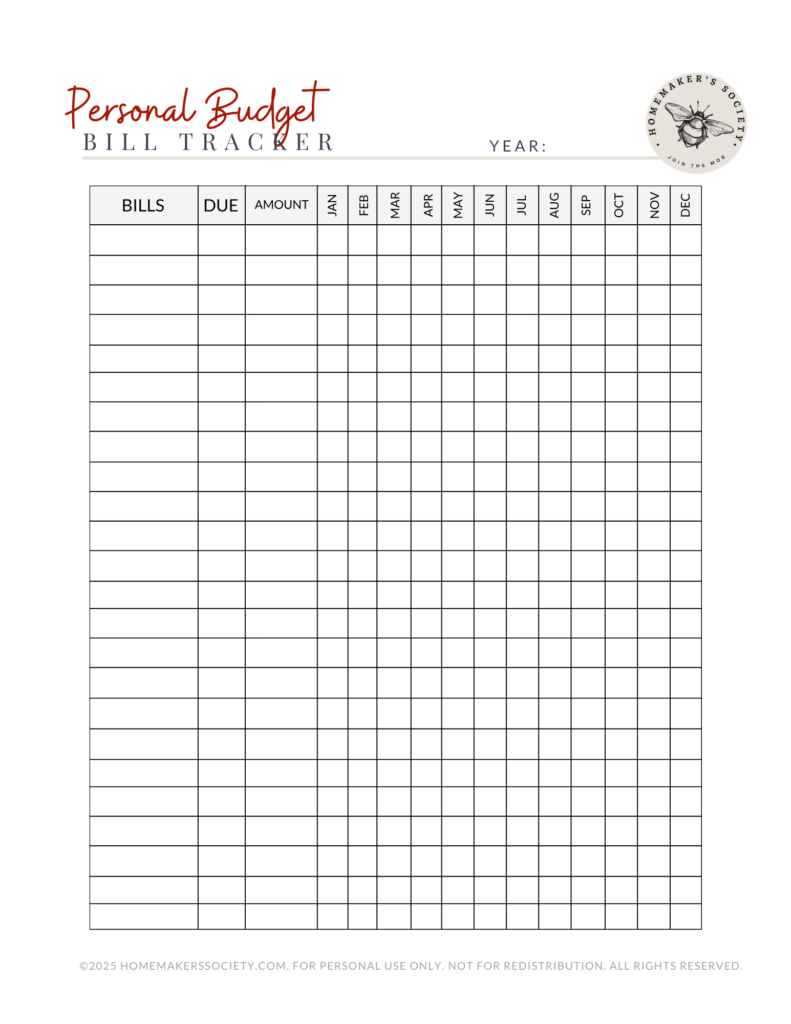
Related: the Bill Tracker in the Home Economy + Budgeting library section helps you list every bill with its due date and track payments across all 12 months — so nothing sneaks up on you.
Step Three: Compare the Two Numbers
Subtract your total expenses from your total income.
If you have money left over — that’s your margin. Decide where it goes before it disappears. Savings, debt payoff, a sinking fund you haven’t started yet.
If your expenses are higher than your income — that’s critical information you need to have. Now you know. Now you can make decisions instead of wondering why the account keeps coming up short. Either way, you’re no longer in the dark.
Step Four: Give Every Dollar a Name
A budget only works when every dollar that comes in is assigned somewhere before it arrives. This is called a zero-based budget — income minus all expenses and savings goals equals zero. Not because you spend everything, but because every dollar has a job.
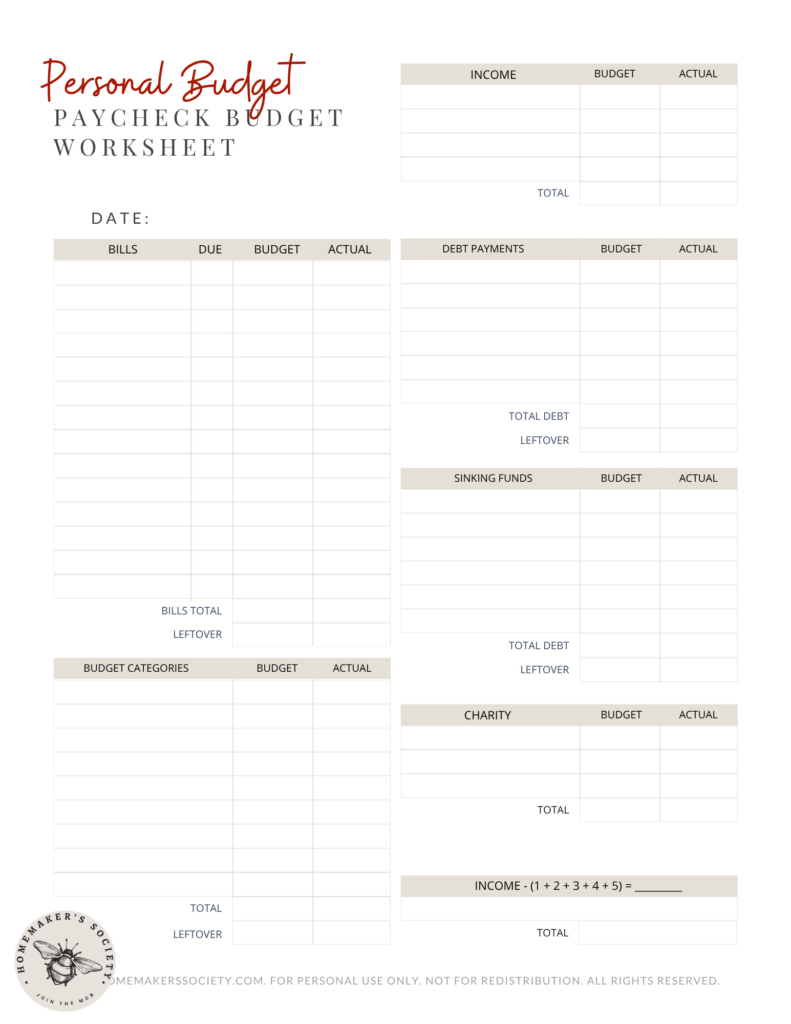
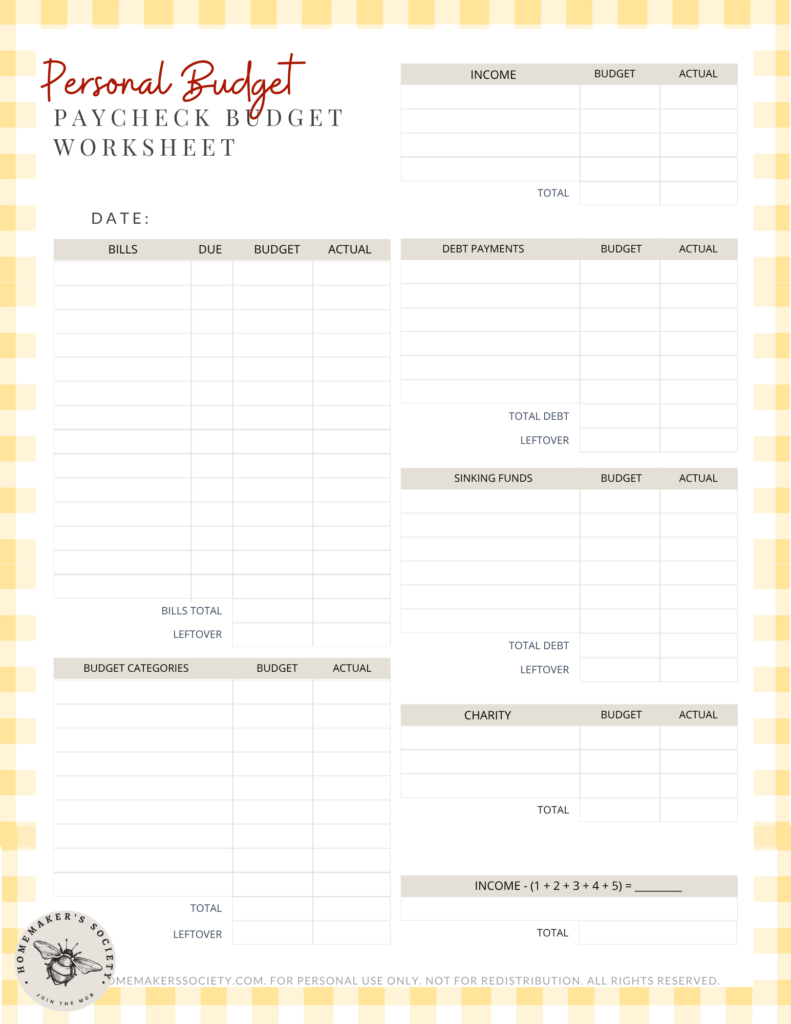
This is where the Paycheck Budget Worksheet comes in. It walks you through income at the top, then bills, then debt payments, sinking funds, budget categories, and charity — section by section. You fill it in once for your baseline budget, then adjust month to month as needed.
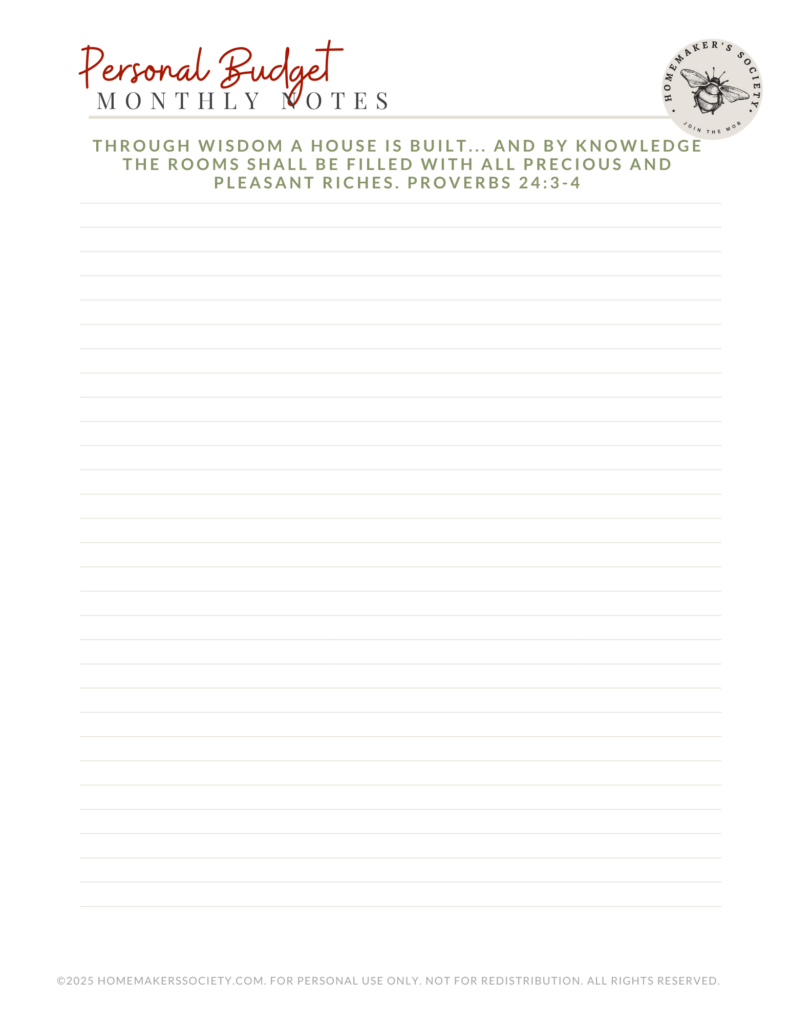
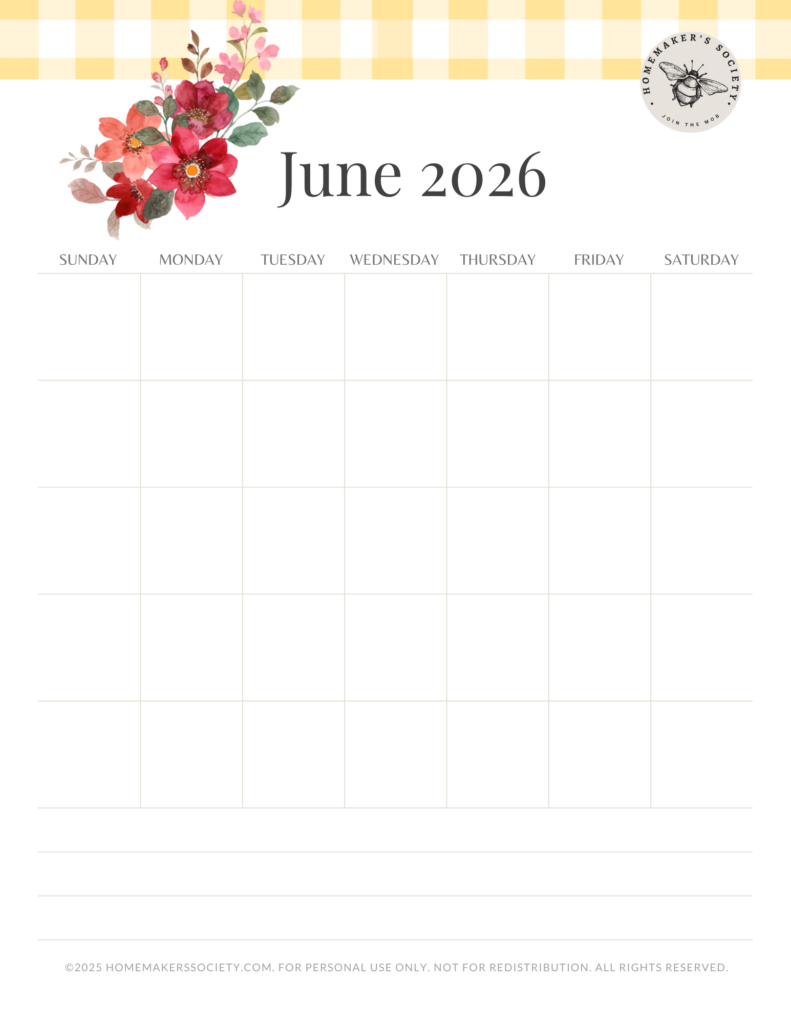
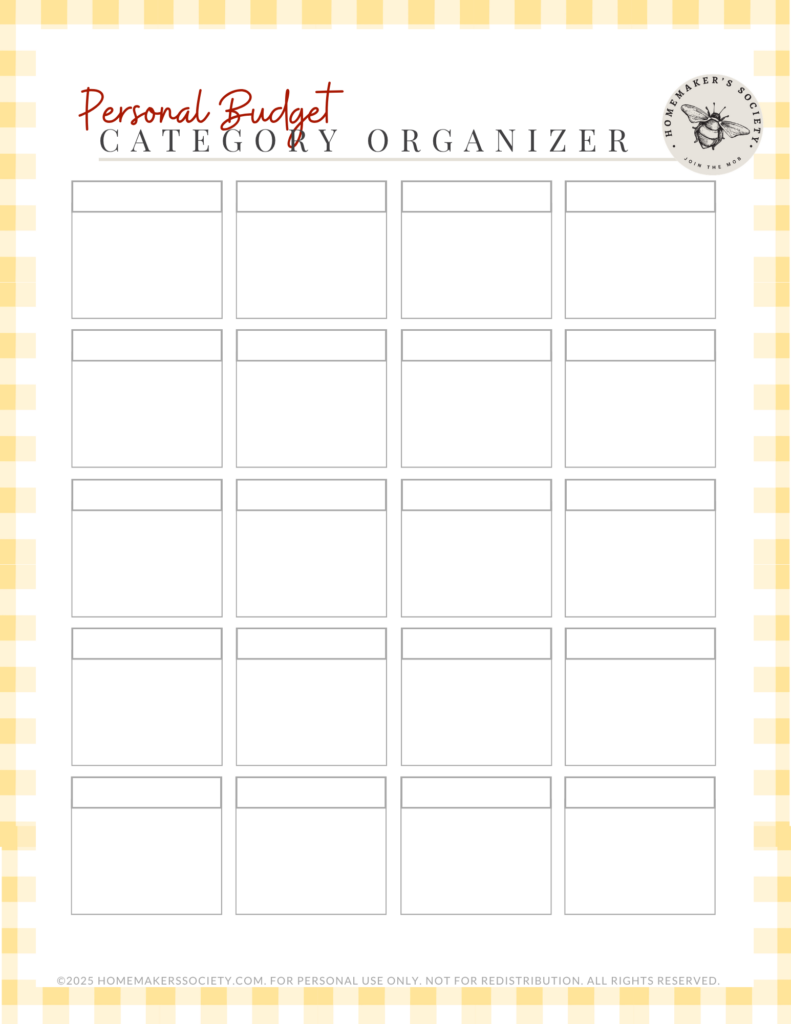
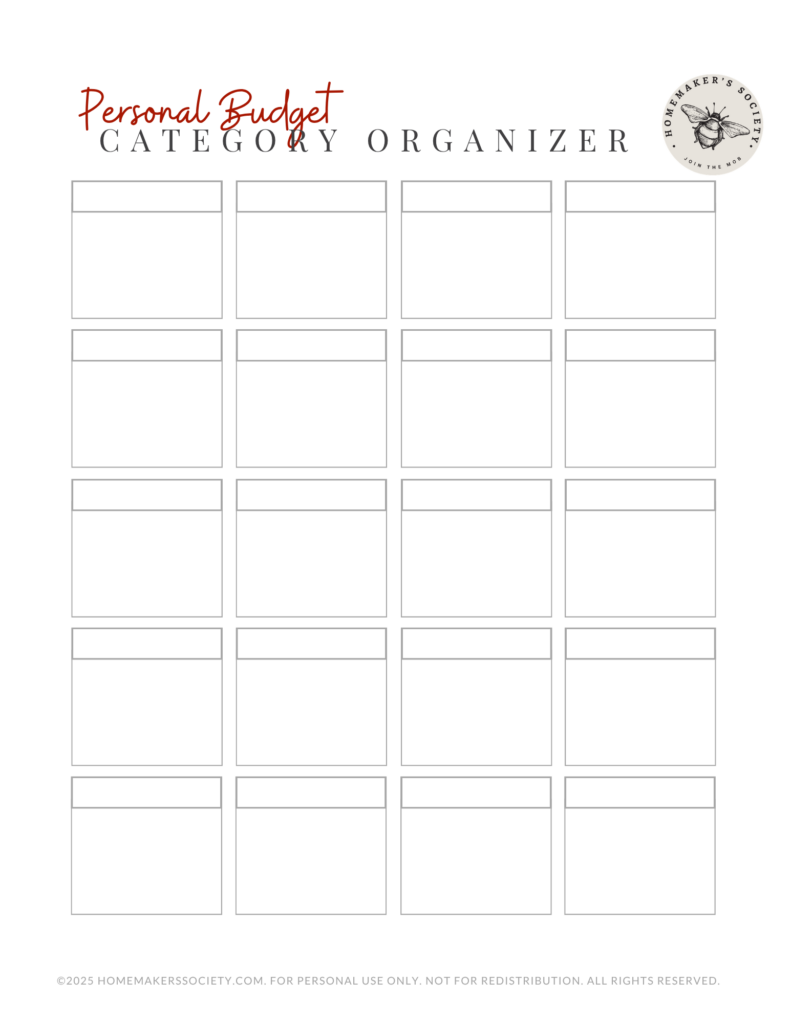
Related: Download the Paycheck Budget Worksheet in the Home Economy + Budgeting library section — it’s the best place to start if you’ve never built a budget before. Here’s a sneak peek of what’s inside the budget planning library for members only!
Step Five: Track What You Actually Spend
Building the budget is step one.
Tracking what actually happens is step two — and it’s where most people stop. You don’t have to track obsessively. You just have to be consistent and take a look at what you’re spending every week.
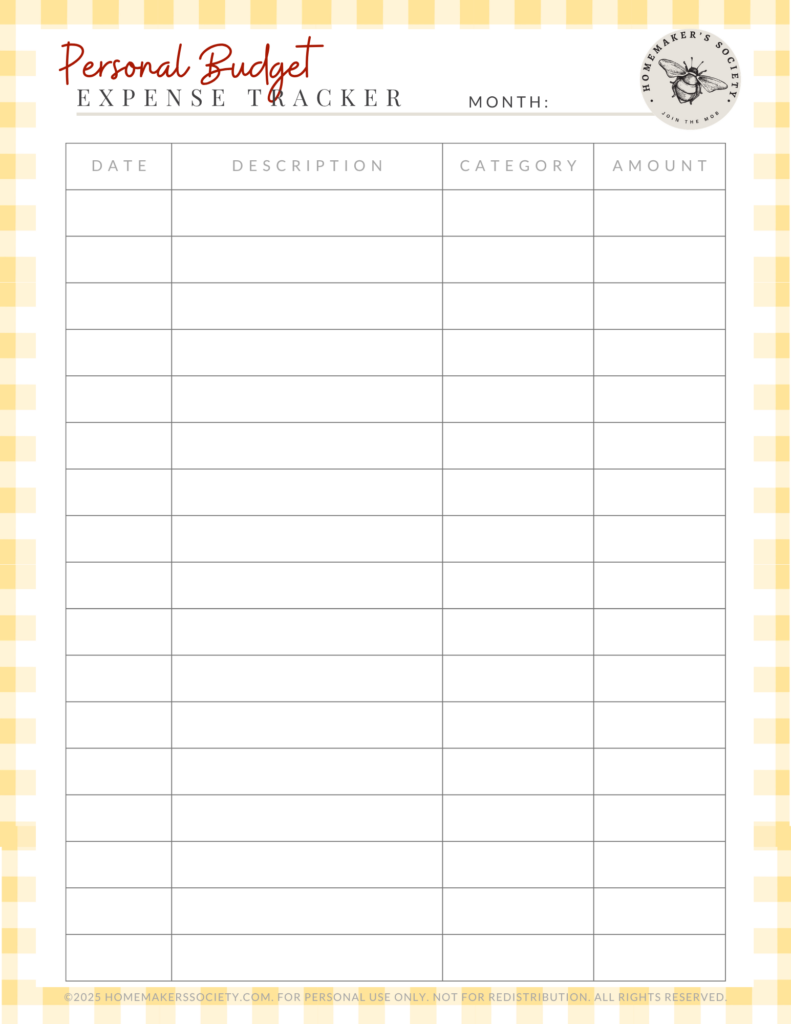
Once a week, for ten minutes, go through your spending and record it. Use the Expense Tracker to log each purchase by date, description, category, and amount. At the end of the month, compare what you planned to what actually happened. Adjust next month’s budget accordingly.
The first month will be imperfect. That’s okay and expected. Budgeting is a skill that gets better with practice – it’s not a test you pass or fail.
The Cash Envelope System
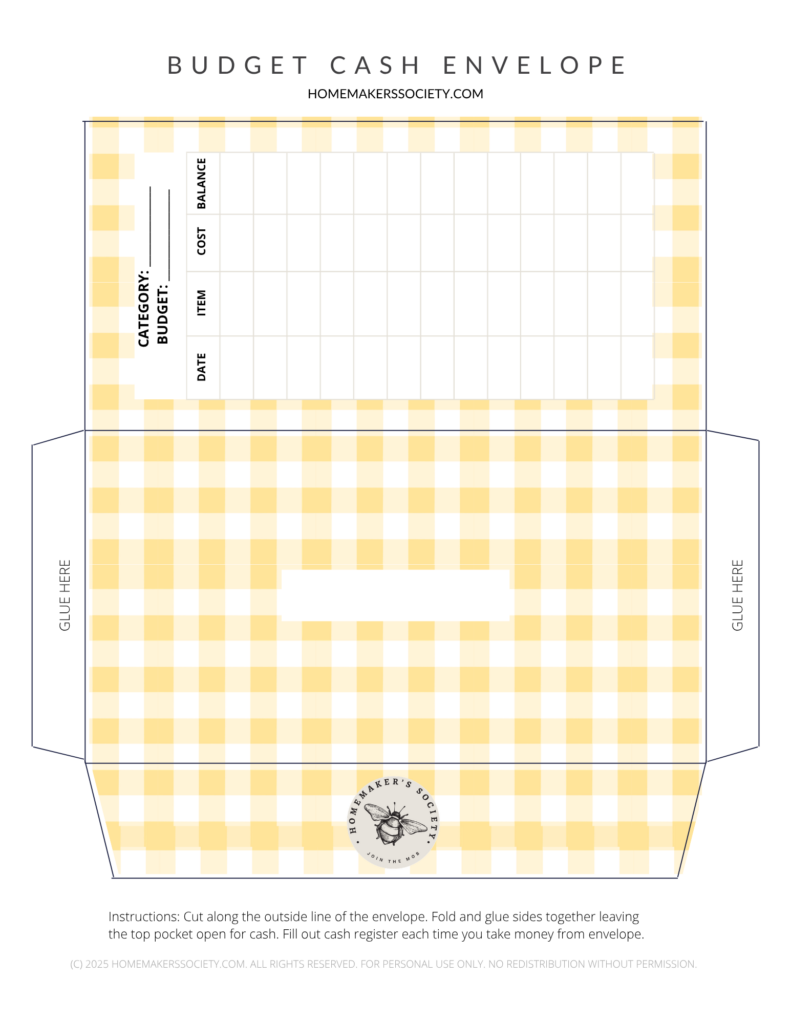
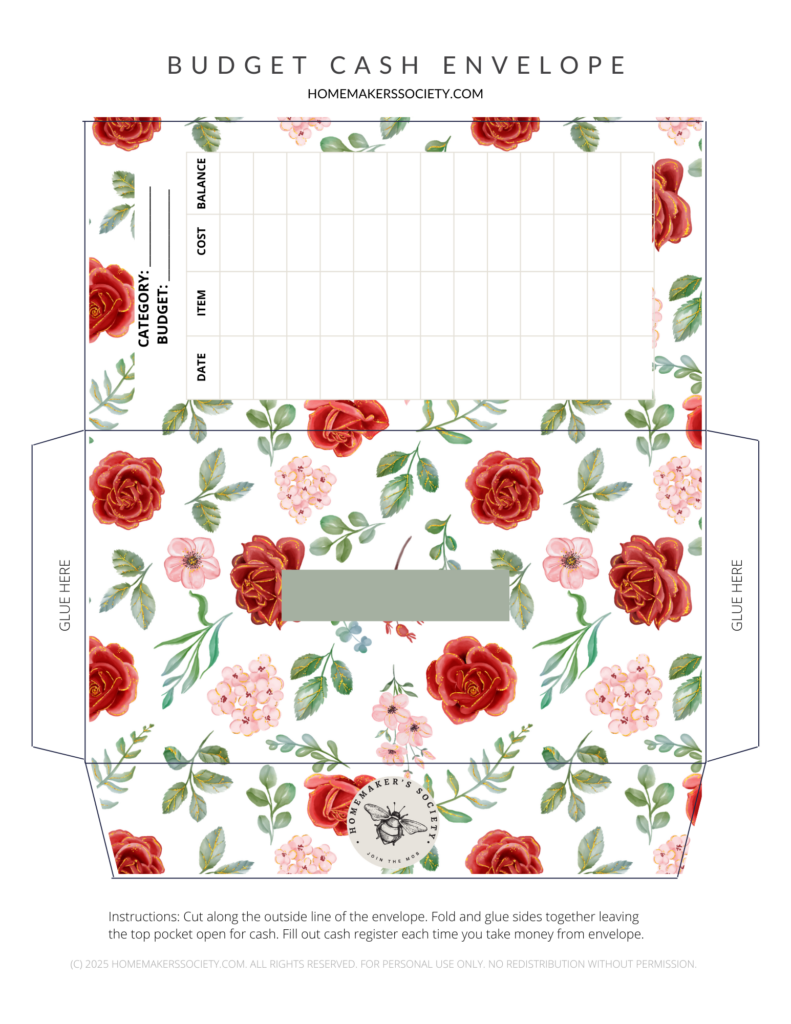
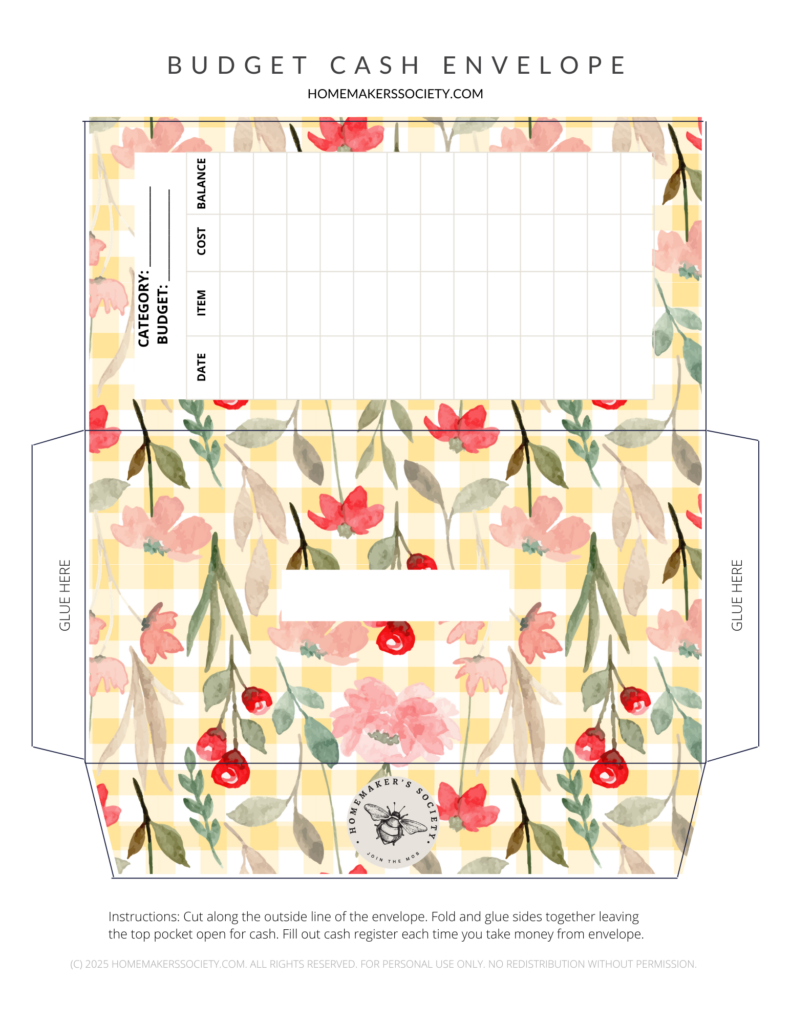
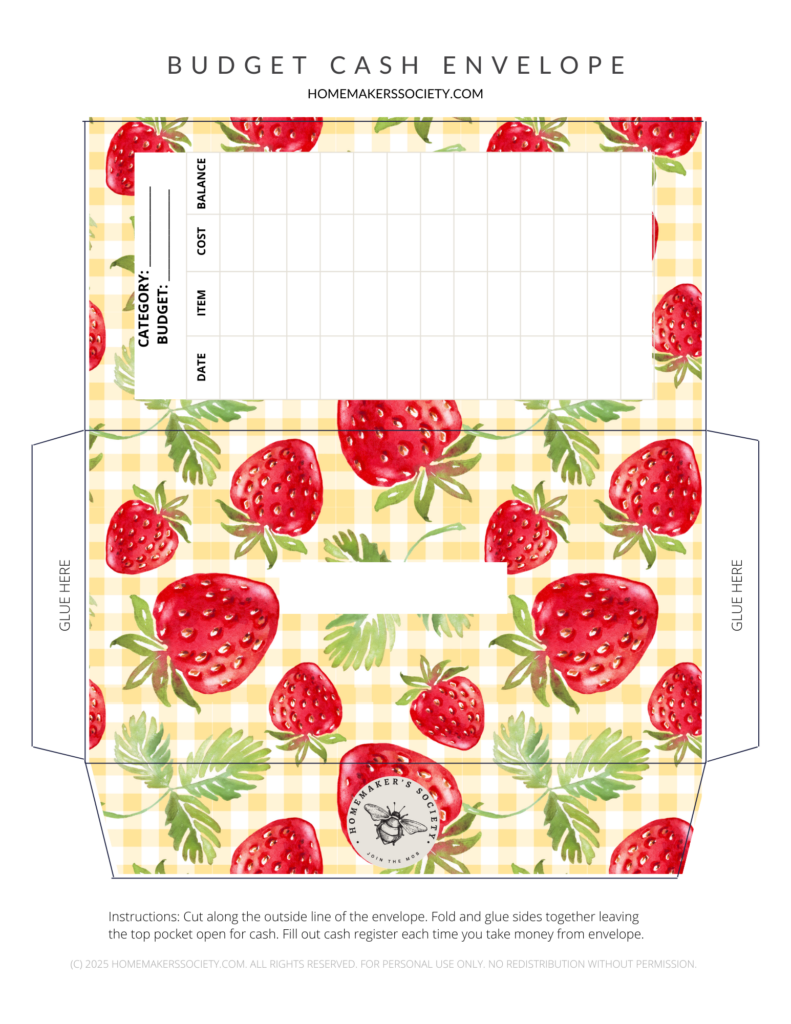
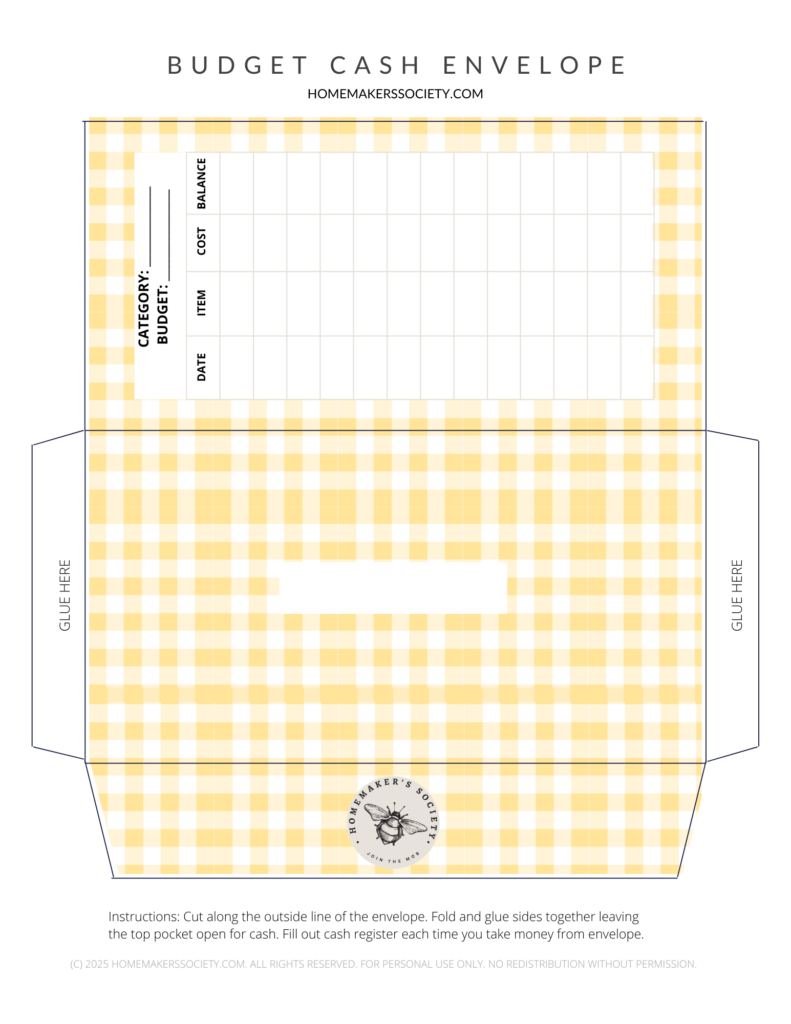
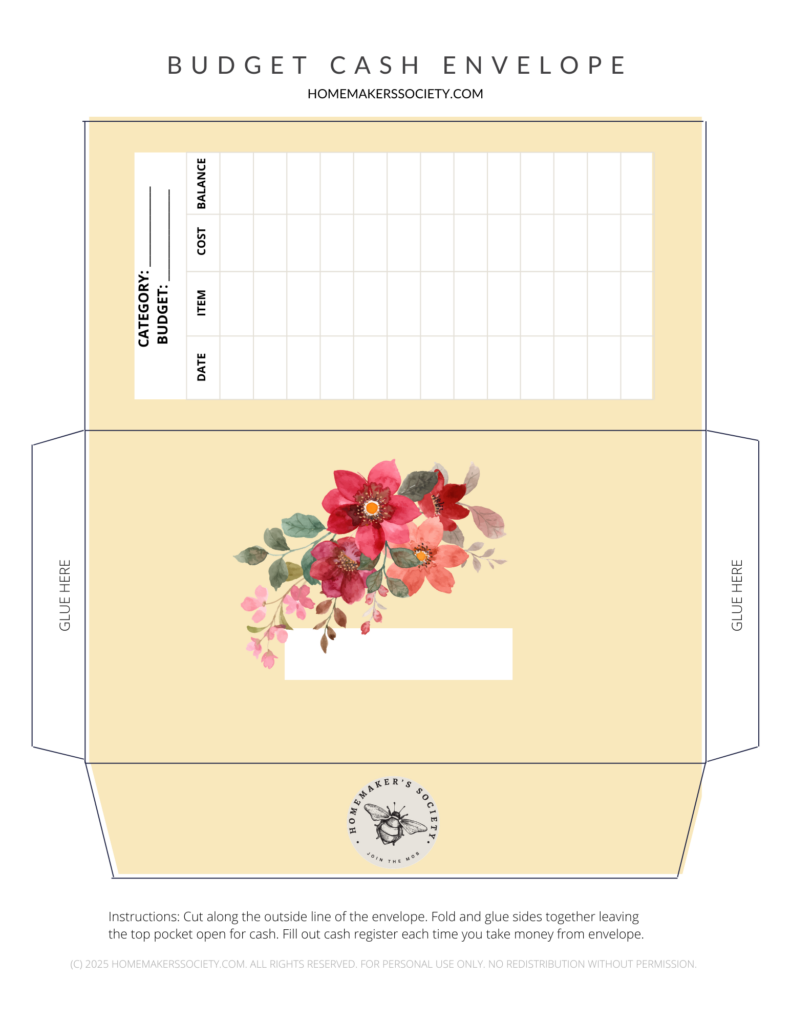
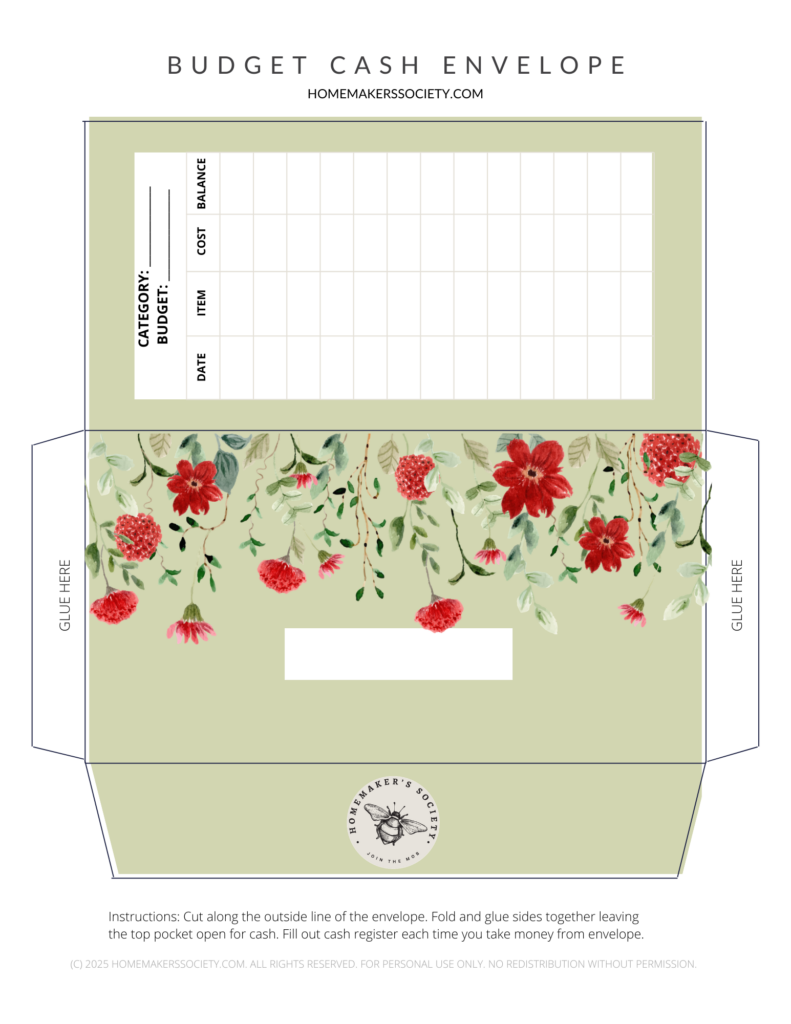
If overspending in certain categories is a persistent problem — groceries, clothing, eating out — a cash envelope can help. You put a set amount of cash in an envelope labeled for that category at the start of the month. When the envelope is empty, that category is done for the month.
It sounds old-fashioned because it is. And it works because it does.
The Home Economy + Budgeting library section has printable cash envelopes in several styles — yellow gingham, floral, snowflake, and more — each with a small spending register inside so you can track what you pull out. See images above.
What About Christmas and Other Big Expenses?
This is the question I get every year around October when the panic sets in. The answer is always the same: you needed to start in January. But since you didn’t, start now.
Take whatever you expect to spend on Christmas, divide it by the number of months remaining, and set that amount aside each month in a dedicated envelope or savings category. Do the same for anything else that’s coming — a vacation, a birthday, or a car repair you know is inevitable.
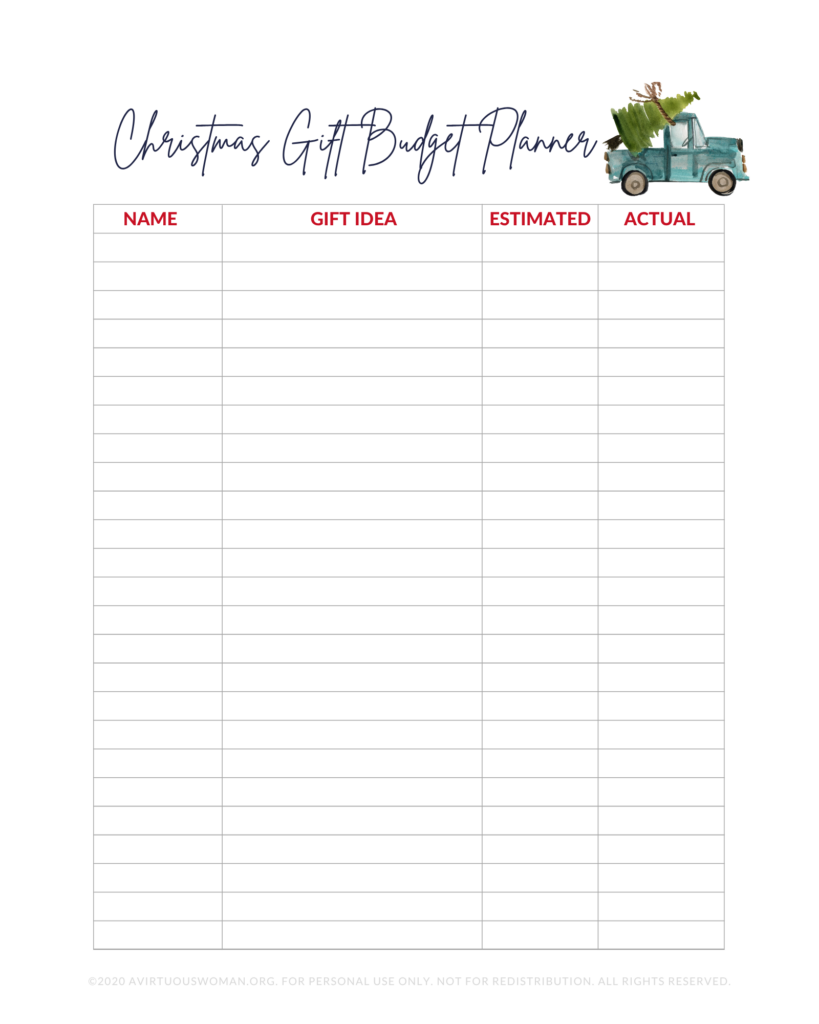
The Christmas Gift Budget Planner in the budget library helps you list every person, set a budget, and track what you’ve spent and what you still owe. Print it in October, not December.
A Note on Simplicity
You don’t need an elaborate system. You need one you’ll actually use.
If a written budget sheet works — use that. If envelopes work — use those. If a simple list on a notepad every Sunday morning works — that counts too. The best budget is the one you look at, the one that tells you the truth about your money, and the one that helps you make decisions instead of reactions.
Start simple. You can always add complexity later. What you can’t do is make good financial decisions without information.
Get the Printables
If you’re a member of The Homemaker’s Society, everything you need to start is inside The Fireside Room under Home Economy + Budgeting. The Paycheck Budget Worksheet, Expense Tracker, Bill Tracker, Cash Envelopes, Savings Tracker, Christmas Gift Budget Planner, and monthly budget pages are all there — ready to print.
Access Home Economy + Budgeting pages in The Fireside Room →
Not a member yet? This is exactly the kind of resource that lives inside the membership — practical, printable, and designed to make the work of homemaking a little more manageable.
Join The Homemaker’s Society →
You might also enjoy:
- How to Set Up a Household Notebook
- How to Set Up a Seasonal Cleaning Rotation
- The Homemaker’s Path — Stage 3: The Order