10 Simple Tips for Beginners: Growing Fruit Trees

In this post, you’ll learn some simple tips to grow fruit trees in your backyard. You’ll find out what you need to do for success. If you’ve ever wanted a fig tree or grapevine at home, we have the tips for growing these and other fruits successfully!
One of the most rewarding things you can do in your garden is to grow fruit. Fruit trees are beautiful, they provide shade and protection for other plants, and you get to enjoy fresh produce all summer long.
When we first moved into our home, one of the things I wanted to do was plant a few fruit trees! They can take years to mature and I knew I wanted to eventually enjoy a good harvest! Some of our fruit trees have done well while others haven’t.
Tips for growing fruit for beginners
If you’ve ever wanted to start growing fruit in your own backyard or had dreams of having a small home orchard, I’m here to help you get started. These tips I’m sharing today will help you get started growing fruit successfully!
1. Fruit trees need ample growing space.
Some fruit trees can grow to a large size – even before producing fruit. It’s important to make sure your yard has enough space for each tree you plan to grow.
2. Plant your fruit trees according to recommended guidelines.
You may not want to plant your fruit trees too close to your house or on north-facing slopes which might become too cold in the wintertime.
3. Be sure your fruit trees have good drainage.
This is especially important if you live in an area that freezes in the wintertime. Planting on a slight grade helps reduce the problem of water pooling.
4. Learn what kind of soil your fruit tree likes.
Some fruit trees, for instance, cherries, peaches, and plums grow just fine in slightly acidic soil (pH 5.0 to 6.5) but most fruit trees prefer a more neutral pH level (around 7-7.5 for good crop production & disease resistance) just as long as the soil has good drainage. The Farmer’s Almanac is a great resource for determining the correct soil pH levels for your tree variety.
4. Prepare the soil well before planting.
You can add compost to improve the quality of your soil which can also help the soil drain better. Compost can also help keep root disease from taking hold and will provide the nutrients fruit trees need to stay healthy. Compost can also help aerate the soil and create aeration pockets, improving heavy soil
5. Plant two to three compatible trees for cross-pollination.
By planting two compatible cultivars – three is even better – you’ll ensure your trees are able to pollinate and bear fruit. However, if you’re planting a self-fruiting tree like ‘Bartlett’ pear, or ‘Honeycrisp’ apple you don’t need to plant more than one. Pollinating your trees isn’t hard. It’s never a good idea to plant just one fruit tree. Be sure not to plant them too close together. Give each tree plenty of space to grow and branch out. Once a tree is planted, you aren’t moving it! So plan wisely!
6. Different fruit trees flower at different times.
Some fruit trees will bloom in early spring and others may not bloom until early summer. It’s important to read up on the varieties of fruit trees you want to plant so you know which ones will do the best in your climate.
7. Make sure you don’t have competing plants near your fruit trees.
Some annuals, perennials, shrubs, trees, and groundcovers can rob your fruit trees of the nutrients it needs to grow healthy. If needed, remove other plants that may compete with your fruit trees.
8. Know which fruits trees grow well in your area.
If you live up north, apples and cherries may be a better choice than peach trees. Read up on your favorite fruit tree varieties before choosing which ones to plant! Another tip is to check out local u-pick farms to see which fruit trees they are growing.
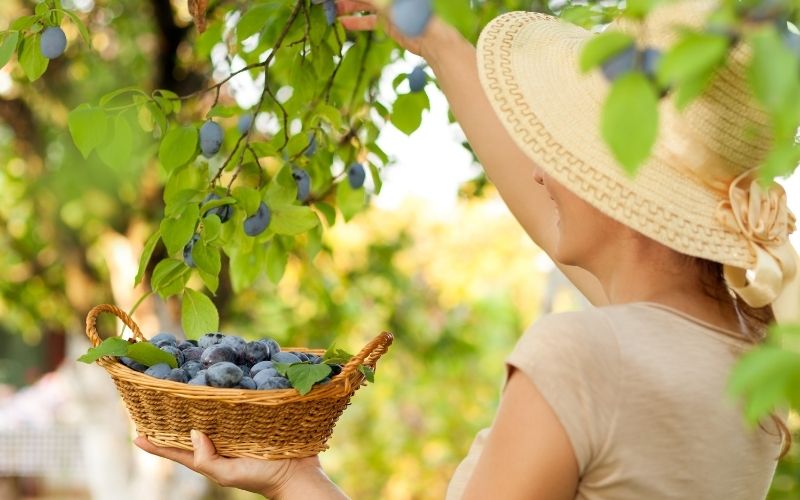
9. Know when your fruit is at its peak for picking.
Knowing when your tree’s fruit ripens is key to enjoying a good harvest. Check your fruit trees daily or several times a week as the fruit grows and make not of which varieties of fruit are ready and when. It’s also important to thin your fruit for a better harvest later.
According to Horticulturist Noelle Johnson on Taste of Home, “Once small, green fruit begins to appear, you need to “thin” out some of your fruit. Thinning fruit means removing some of the small, unripened fruit so that there is approximately 4 – 6″ inches between each fruit. This ensures larger and high-quality fruit later because fruit trees only have so many resources in which to dedicate to growing fruit.”
10. Decide how best to store your fruit harvest.
Learning how to store or process and put up the fruit you harvest is important. If you have access to a cool, dry place or even a root cellar, some fruits can last months when properly stored away. Alternatively, you may want to dehydrate your fruit, make fruit leathers, jams, jellies, or preserves. Fruit can rot pretty quickly when not store correctly, so give careful thought and planning to storing your harvest!
Tip: You also may enjoy blessing friends and neighbors with your extra bounty! Getting a basket of home grown apples from a friend is always a treat!
I hope that as you get started planning and planting, you’ll have fun growing your own fruit! Biting into your own home grown piece of sweet fruit will add much joy to your life and of those you love.
Conclusion
Creating your own fruit orchard can be a rewarding investment in both time and effort. There are many advantages to growing fruit at home, including the opportunity to eat delicious fresh produce year-round without pesticides, knowing exactly what goes into your food, being able to have enough for yourself and others while still saving money on grocery bills, and creating an oasis of beauty that will bring joy to all who see it.
If this sounds like something you want to get started with today, head over here where we’ve compiled everything else you need know about how to grow backyard fruit trees from scratch! Thanks so much for reading – feel free to share this post with us using the buttons below!
You may also enjoy reading: